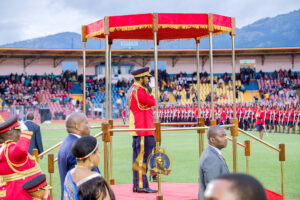
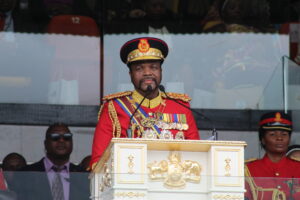
Over the 40 years of His Majesty King Mswati III’s reign, Siteki has steadily evolved from a modest administrative and trading town into one of the Lubombo Region’s most important urban centres, with visible gains in roads, commercial infrastructure, township development, service delivery, and local economic empowerment.
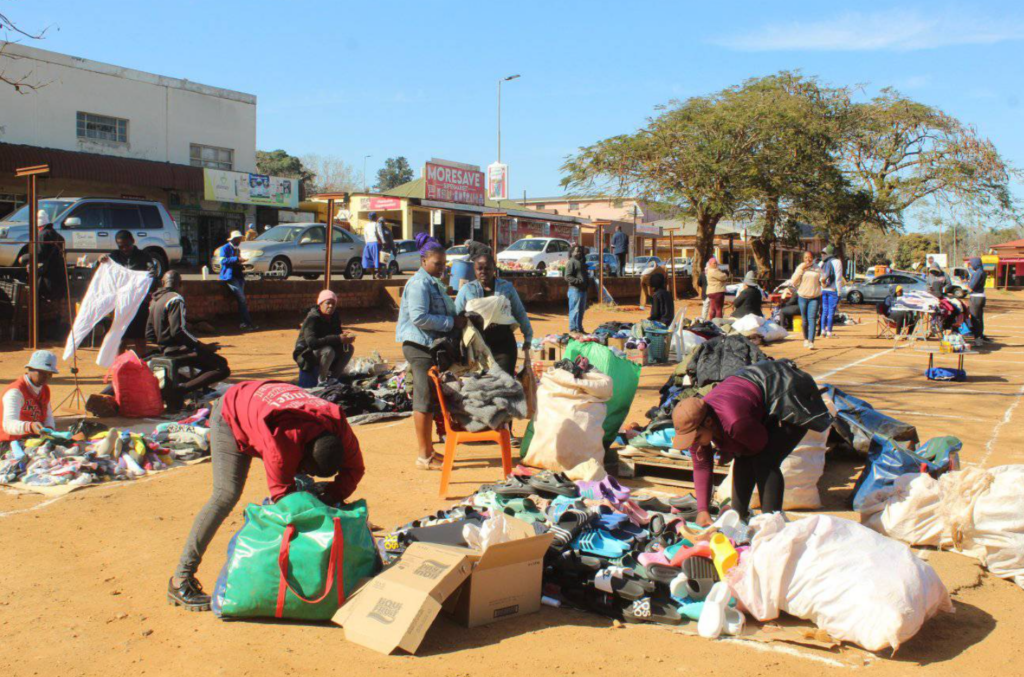
Today, the town tells its story through a changing skyline, expanding public infrastructure, and growing economic activity. From the Siteki Main Market and bus rank to Lubombo Mall, the Courtyard Mall development, restaurants, banking facilities, health services, and educational institutions, Siteki is increasingly positioning itself as a more confident and active regional hub.
“Over four decades, Siteki has grown from a quieter administrative town into a more active urban and regional hub.”
A town is becoming more visible
One of the clearest signs of Siteki’s transformation is the expansion of its commercial and service infrastructure. Investments such as Lubombo Mall, the Courtyard Mall project, and the upgrading of Siteki Hotel have helped modernise the town’s profile while stimulating local business activity.
These developments are not only changing the physical appearance of Siteki. They are also drawing more people into the town, supporting jobs, strengthening small enterprises, and improving the overall experience for residents and visitors. In doing so, they are reinforcing Siteki’s role as an emerging centre for commerce, services, and tourism in the Lubombo Region.
Roads and public investment are reshaping mobility
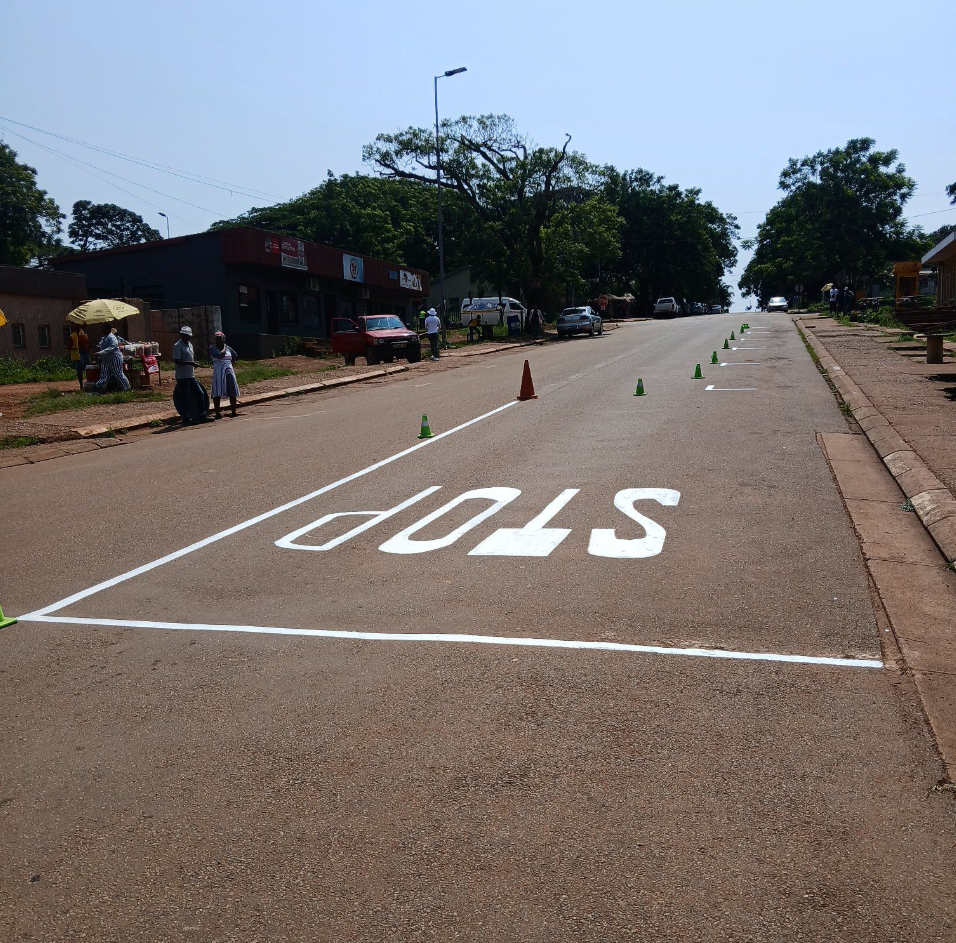
Road infrastructure has been one of the strongest markers of progress in Siteki over the years. Ngwenya Street and Jacaranda Street have been surfaced and fitted with streetlights, while the MR7 has also been improved through surfacing and lighting. The D12 corridor has benefited from solar streetlighting and resurfacing, Hambakahle Road has been upgraded, and about 30 per cent of feeder roads have been surfaced.
These improvements have enhanced movement, visibility, and safety across the town, helping Siteki function more efficiently as both a residential and commercial space.
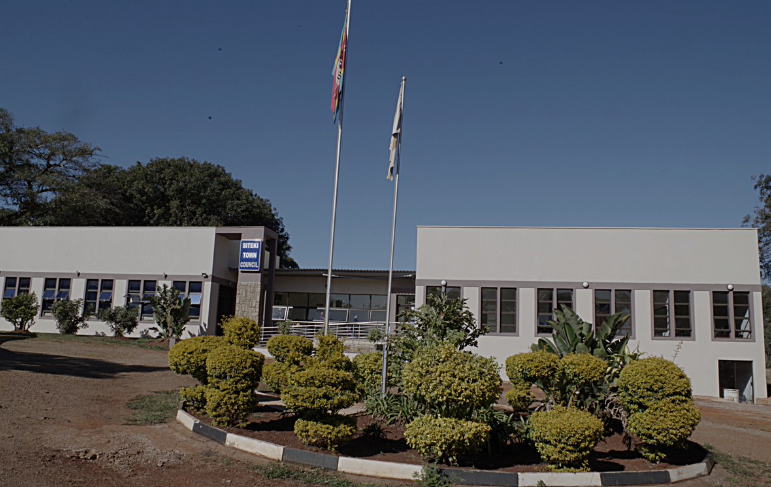
Public-facing infrastructure has also expanded. The Main Town Hall, the new bus rank, Civic Centre office improvements, and Siteki Main Park all reflect sustained investment in civic spaces that support daily urban life and strengthen the town’s identity.
“Road surfacing, lighting and civic investment have helped improve mobility, safety and the quality of urban life in Siteki.”
Township growth and stronger urban structure
The town’s growth is also visible in its residential footprint. Human settlement expansion in Mvelo, Mpumalanga, and Moyeni points to a municipality that is not only growing, but increasingly formalising that growth through a more structured urban pattern.
This has been supported by the development of a town planning scheme, which provides direction for land use and infrastructure development. That planning framework is important for guiding future investment, reducing disorder, and ensuring that Siteki’s expansion remains manageable and sustainable.
As a result, Siteki’s transformation is no longer limited to its central business areas. It is also being reflected in the way communities are developing and how people are building their futures within a more organised urban environment.
Service delivery is becoming more responsive
Growth is not measured only by buildings and roads. It is also reflected in the quality of local governance and service delivery.
Siteki has made progress in this area through rebranding efforts and the automation of municipal functions, supported by improved administrative systems. The establishment of a Record Centre and a pound forms part of that broader effort to modernise council operations and make service delivery more responsive.
Improved rates collection performance also suggests a municipality working to strengthen efficiency and accountability. These institutional gains matter because they help support planning, enforcement, and public confidence in local government as the town continues to grow.
“Urban progress is not only about visible infrastructure, but about building stronger systems that serve people better.”
Putting people at the centre of local economic development
Siteki’s growth story is not only about concrete and construction. It is also about how local development is being linked to people’s lives.
Through its Local Economic Development Strategy, the town has prioritised women and youth empowerment, business education, and practical skills development. That has helped ensure that economic growth is not viewed only in terms of infrastructure, but also in terms of opportunity and inclusion.
Working with partners such as JA, BSA, UNDP, and COSPE under the EU-funded YES Project, the town has supported programmes that include youth business education, artisanal skills development, handicraft training for women, recycling initiatives, and organic compost production. Support for the registration of cooperatives has also helped local groups formalise and position themselves for broader opportunities.
Partnerships widening opportunity
Partnerships have increasingly become central to Siteki’s development model.
A Memorandum of Understanding with the Eswatini Youth Enterprise Revolving Fund has helped strengthen opportunities for young people to access training, business guidance, and possible funding pathways.
The town has also signed an agreement with the School for the Deaf Primary School to support entrepreneurial programmes for learners, while cooperation with Vuvulane Town Board has opened space for shared learning around service delivery and local governance.
These partnerships show that Siteki’s future is being shaped not only by municipal effort but also by collaboration across institutions and communities.
Community voice and the next phase of growth
Community participation is also becoming more visible in the town’s development journey. Through the Community Score Card Project, implemented with COSPE under EU funding, focal groups have been created to strengthen communication between council, ratepayers and corporate stakeholders.
That kind of engagement is important as Siteki looks ahead to the next phase of its urban growth. Challenges remain, including informal settlements and continued reliance on property rates as a main source of municipal income. These realities point to the need for stronger collaboration between central and local government, as well as more diversified sources of urban financing.
Still, the broader picture remains one of clear progress. Over 40 years, Siteki has demonstrated how roads, civic spaces, township development, institutional strengthening, and people-focused programmes can work together to build a stronger urban future.
“The next phase of Siteki’s growth will depend on stronger partnerships, smarter planning and more diversified urban financing.”
A stronger role in the Lubombo Region
As the country reflects on 40 years of His Majesty King Mswati III’s reign, Siteki stands out as one of the towns that best illustrate how steady investment and long-term vision can reshape an urban centre.
From improved roads and civic facilities to expanding townships and empowerment programmes, the town’s development reflects a broader national story of transformation. Siteki is no longer simply a quiet administrative point on the map. It is increasingly a regional hub with a stronger economic, civic, and social role in the Lubombo Region.
Share this post
Subscribe to our newsletter
Keep up with the latest blog posts by staying updated. No spamming: we promise.