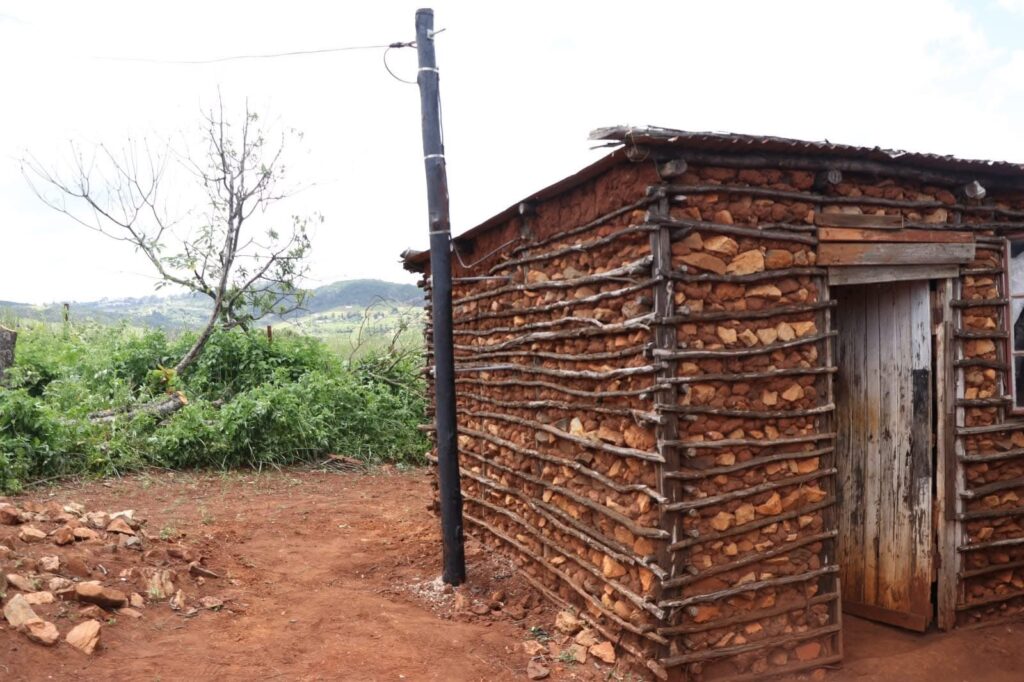
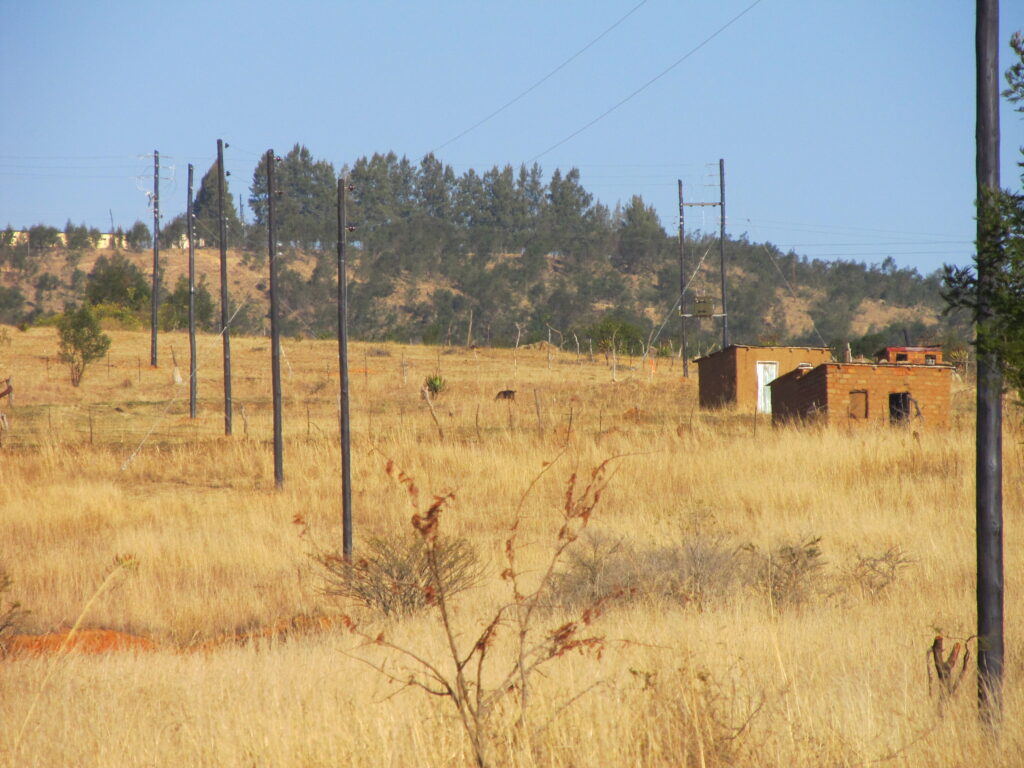
The story of Eswatini’s progress over the past four decades cannot be told without the story of energy. When His Majesty King Mswati III ascended to the throne in 1986, national electricity access stood at just 2 percent, with most rural communities still off-grid and energy infrastructure far more limited than it is today. Four decades later, access has risen to 88 percent, reflecting one of the country’s most significant development transformations under the Ministry of Natural Resources and Energy.
2% → 88% Electricity access in Eswatini, from 1986 to today.
From Limited Access to National Expansion
The transformation began in 1988 with the establishment of an Energy Unit under the Ministry’s Planning Section. By 1990, it had evolved into an Energy Section with budgets for rural electrification capital projects focused on schools, clinics and community water pumping schemes. What started with just seven pilot projects became the foundation of a national movement to take electricity beyond urban centres and into rural communities.
Momentum accelerated around 2000 after a Swede Power-supported study helped identify rural electrification targets and quantify the scale of the work ahead. A Select Committee on Rural Electrification was then formed to align funding streams that had previously been scattered across different government portfolios, giving the programme stronger coordination and clearer direction.
Rural Electrification Changes Lives
With support from development partners including the Republic of China (Taiwan) and the World Bank Group, the Rural Electrification Programme drove one of the country’s biggest service-delivery gains. The Rural Electrification Access Fund, established following the 2018 National Energy Policy, has directly financed electricity connections for 14,550 households. It has also supported solar home systems for remote communities and solar-powered water pumping schemes, widening access to both energy and clean water.
14,550 households Directly connected through the Rural Electrification Access Fund.
The expansion is continuing. In the Shiselweni Region, the Network Reinforcement and Access Project is extending grid infrastructure through a World Bank-supported E700 million investment implemented by the Eswatini Electricity Company. The project includes ReadyBoard connections and is expected to connect an additional 8,000 households, with direct benefits for livelihoods, enterprise and local development.
8,000 more households Targeted for connection under NRAP in Shiselweni.
Building a Stronger Power Sector
Expanding access on this scale required more than rural connections. It also demanded stronger transmission systems, new institutions and a modern legal framework. One of the major milestones was the establishment of the Mozambique Transmission Company, MOTRACO, in which Eswatini is a shareholder. Through a 400 kV transmission line linking Eswatini, Mozambique and South Africa, the country secured a strategic route for electricity imports while also creating potential to export surplus power through the Southern African Power Pool.
The Electricity Act of 2007 marked another turning point. It ended the monopoly of the former Swaziland Electricity Board and transformed it into the Eswatini Electricity Company, opening the market to Independent Power Producers. In the same year, the Energy Regulatory Act established the Eswatini Energy Regulatory Authority, creating a more modern framework for licensing, oversight and procurement of new generation capacity. Guided by the Energy Masterplan 2050, ESERA is now procuring 165 MW of power from the private sector, including 75 MW of solar PV, alongside biomass initiatives.
165 MW Power currently being procured from the private sector.
Reforming the Petroleum Industry
While electrification was expanding, the Ministry was also reshaping the downstream petroleum sector. In 2004, Eswatini adopted the Basic Fuel Pricing methodology in collaboration with SACU, introducing a more transparent pricing model aimed at balancing consumer protection with fair returns for wholesalers. This was later strengthened by the Oil Industry Profit Margin Model in 2018 and the Petroleum Act of 2020, which established the Eswatini National Petroleum Company to help secure national fuel supply.
Today, access to petroleum products has widened considerably, with 96 operational service stations spread across the country, including deeper reach into rural areas. The market has become more competitive, with local oil companies now operating alongside international brands.
96 service stations Now operational across Eswatini.
Strengthening Energy Security
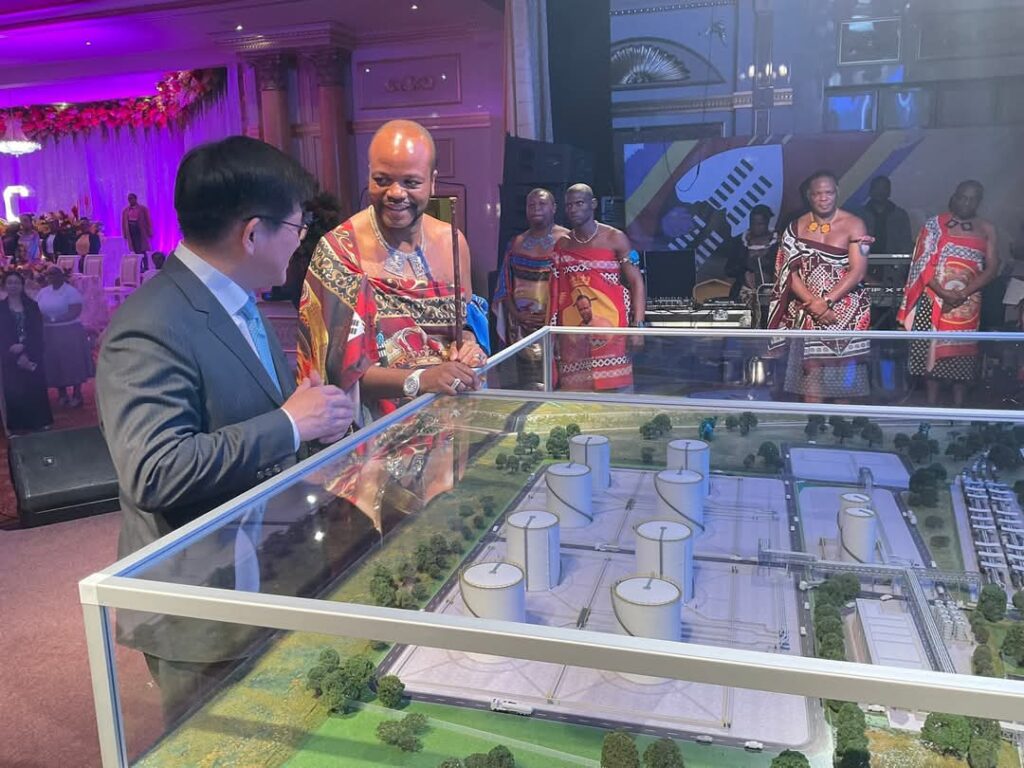
The Ministry’s focus has increasingly turned to resilience. To reduce vulnerability to external disruptions, the Eswatini National Petroleum Company is developing an 80 million-litre Strategic Oil Reserve Facility at Phuzamoya in the Lubombo Region. Financed through a US$300 million loan from the EXIM Bank of China (Taiwan) signed in 2025, the facility is designed to hold a 60-day supply of diesel, unleaded petrol and ethanol. By late 2025, preliminary works, including site clearing and bulk earthworks, were already underway.
80 million litres Planned capacity of the Strategic Oil Reserve Facility. 60 days Target national fuel cover.
Cleaner Energy for Households
The Ministry’s transformation agenda also extends into household energy. In August 2024, ENPC launched Phephile Gas, an LPG product distributed in explosion-proof composite cylinders aimed at addressing longstanding safety concerns around domestic gas use. The product is now being distributed through 54 independent outlets nationwide, expanding access to cleaner and safer cooking solutions for households across the country.
54 outlets Nationwide distribution points for Phephile Gas.
A Legacy of Access, Reform and Resilience
Taken together, these milestones tell a compelling story of national transformation. From 2 percent electricity access in 1986 to 88 percent today, from seven pilot projects to thousands of household connections, from petroleum market reform to strategic reserves and cleaner household energy, the Ministry of Natural Resources and Energy has helped build a stronger platform for growth. Over four decades, its work has not only powered homes and businesses, but also strengthened resilience, widened opportunity and supported national development.
The Ministry’s transformation agenda also reaches into the household energy space. In August 2024, ENPC launched Phephile Gas, an LPG product distributed in explosion-proof composite cylinders that respond directly to longstanding safety concerns around domestic gas use. The initiative is now being distributed through 54 independent outlets nationwide, expanding access to cleaner cooking solutions for households across the country.
A legacy of access, reform and resilience
Share this post
Subscribe to our newsletter
Keep up with the latest blog posts by staying updated. No spamming: we promise.