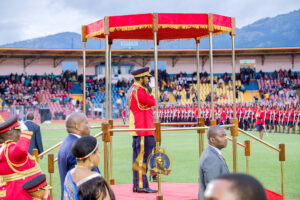
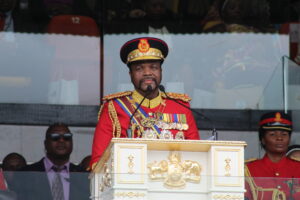
Over the past four decades, Pigg’s Peak has steadily evolved from a modest forestry and mining settlement into a more structured urban centre serving the northern Hhohho Region. Through improved roads, stronger public amenities, township growth, commercial expansion, and social infrastructure, the town has become more connected, more capable, and more confident in its future.
A town that grew beyond its origins
There was a time when Pigg’s Peak was known more for what surrounded it than for what stood within it. In the late 1980s, the town was primarily associated with forestry and mining, with limited infrastructure and a modest urban footprint. But over the years of His Majesty King Mswati III’s reign, that picture began to change.
A major turning point came on 5 March 1993, when Pigg’s Peak was declared a Town Council. That status marked more than an administrative change. It laid the foundation for more organised urban growth and a stronger role for the town in serving both residents and surrounding rural communities. What emerged over time was not simply a larger town, but a more functional one, better equipped to support movement, trade, service delivery, and everyday community life.
“Over four decades, Pigg’s Peak has grown from a modest forestry and mining settlement into a more structured urban centre serving the northern Hhohho Region.”
Order, movement, and a stronger town centre
Among the defining milestones in the town’s growth was the 1995 agreement for the development of the Pigg’s Peak Plaza complex. The project did far more than add a commercial building. It introduced important public amenities, including a bus rank, taxi rank, public market, and sanitation facilities, which were later handed over to the Town Council.
Before this intervention, transport and trading were far less structured, and public sanitation facilities were inadequate. The plaza helped create a cleaner, more orderly, and more functional town centre, reinforcing Pigg’s Peak’s role as a transport and trading hub for the wider area. It also improved the daily experience of residents, traders, and commuters, while giving the town a more visible civic and commercial core.
“What has taken shape over time is not simply a larger town, but a more capable one — better equipped to support movement, trade, community life and future investment.”
Building a civic identity
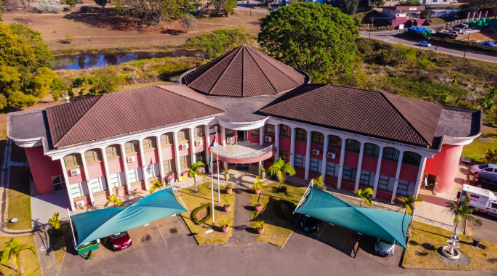
The establishment of dedicated Civic Offices marked another important chapter in the town’s transformation. Moving from rented commercial premises into a purpose-built administrative centre gave the Town Council a stronger institutional identity and improved the efficiency of municipal operations.
The investment also proved sustainable. The E4.5 million externally financed project was fully repaid by 2018, underlining the long-term value of building permanent civic infrastructure. For a growing town, such infrastructure is not symbolic only. It strengthens governance, improves continuity, and signals confidence in the future.
“The full repayment of the E4.5 million Civic Offices project by 2018 underscored both the value and sustainability of investing in permanent municipal infrastructure.”
Roads that changed the rhythm of life
Road infrastructure offers one of the clearest signs of Pigg’s Peak’s transformation. In the 1980s, much of the internal road network was gravel, bringing the usual challenges of poor durability, weather-related disruption, and high maintenance costs. The upgrading of the MR1 to bitumen standard, therefore, marked a major turning point, improving links between Pigg’s Peak and other key centres.
That progress was reinforced in 2012 through the Swaziland Local Government Project, supported by the World Bank. Pigg’s Peak benefited from improvements to Nazarene Road 1, Market Street, Hlubi and Nkomazi roads, as well as Delivery Road and Peak School Road. These upgrades improved mobility, strengthened service delivery, and supported the town’s expanding residential and commercial needs.
“From gravel roads in the 1980s to a stronger internal road network and improved regional connectivity, infrastructure has changed the rhythm of life in Pigg’s Peak.”
The Maguga Dam effect
The construction of Maguga Dam by the Komati Basin Water Authority was one of the biggest catalysts in Pigg’s Peak’s modern development. During the construction phase, the influx of engineers, contractors, and labourers increased demand for housing, goods, and services, creating immediate commercial opportunities for the town. Access roads and transport links were also improved, leaving benefits that outlasted the project itself.
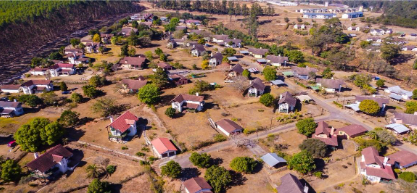
One of the most important long-term outcomes was the rise of Glen Township. Initially created to house workers and associated populations, Glen developed into a permanent residential area and became part of Pigg’s Peak’s wider urban framework. In that sense, the dam not only brought major engineering infrastructure. It also expanded the town’s housing profile, population base, and socio-economic reach.
“The Maguga Dam project did not only bring engineering infrastructure. It also helped reshape Pigg’s Peak’s residential footprint and economic reach.”
Social assets that stayed behind
The legacy of the Maguga Dam project extended beyond construction. Municipal and community assets valued at E68.4 million were later handed over to the Town Council. These included a multipurpose hall, sports fields, a materials yard, bulk water supply infrastructure, Glen Township infrastructure, a landfill site, and renovations to the Pigg’s Peak Country Club.
These were not minor extras. They became part of the town’s development foundation. The multipurpose hall created space for meetings and community events. The sports fields supported recreation and youth wellbeing. The renovated country club strengthened the leisure and tourism potential. Collectively, these facilities expanded the council’s ability to support both service delivery and quality of life.
“Assets worth E68.4 million helped turn infrastructure gains into long-term municipal and social value for the town.”
Growth that reached the community
Pigg’s Peak also hosts one of Eswatini’s three sanitary landfills, a significant asset in the town’s urban management story. Commissioned in 2000 with an estimated lifespan of 20 years, it has remained in use for 25 years and continues to play an important role in managing rising waste volumes linked to population growth and urbanisation.
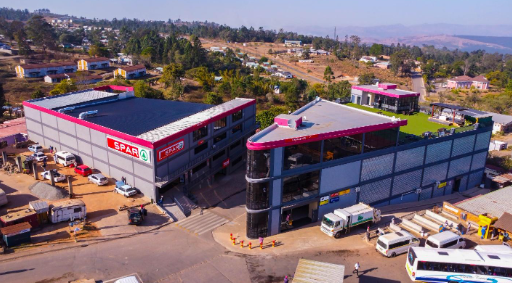
Commercial activity has also deepened. The development of the town’s mall, anchored by SPAR and complemented by newer retail businesses, helped modernise the commercial face of Pigg’s Peak. In early 2025, the commissioning of the town’s first factory shell added another sign of growing ambition, pointing to efforts to attract investors, stimulate industrial activity and create future jobs.
“From transport and trade to waste management and industrial ambition, Pigg’s Peak’s growth has extended far beyond its original resource-based identity.”
A more inclusive urban future
Pigg’s Peak’s development story is not only about roads, buildings and commercial growth. It also reflects efforts to make urban progress more inclusive. The formalisation of Mangwaneni Township in the early 2000s improved tenure security and basic services for 139 households. The Macambeni formalisation project, launched in 2014, was designed to benefit 100 households.
At the community level, three social centres in Malandalahle, Mangwaneni, and Macambeni continue to provide at least one meal a day, alongside education, recreation, psychosocial support, and health-related services. Youth and women have also been supported through skills development, leadership support, entrepreneurship training, and mentorship. This gives the town’s growth a human face, linking physical development with dignity, inclusion, and well-being.
“Pigg’s Peak’s transformation is not only about roads and buildings. It is also about dignity, inclusion and the strengthening of community life.”
The next chapter
Pigg’s Peak’s journey over the past 40 years is a story of measured but meaningful transformation. From a modest resource-based settlement, it has grown into a more organised town with stronger infrastructure, broader amenities, improved commercial space, and a wider social development footprint.
Challenges remain, particularly around sustainability, waste capacity, and the need for more resilient planning. Yet the direction is clear. Pigg’s Peak is no longer standing on the margins of growth. It is steadily shaping a firmer place for itself within Eswatini’s national development story.
“Pigg’s Peak is no longer standing on the margins of growth. It is shaping a firmer place for itself within Eswatini’s national development story.”
Share this post
Subscribe to our newsletter
Keep up with the latest blog posts by staying updated. No spamming: we promise.