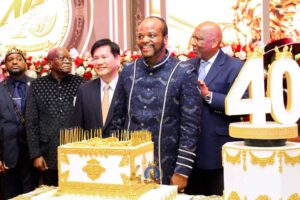
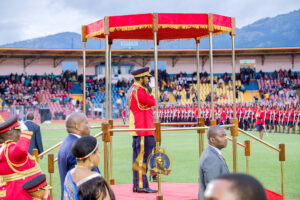
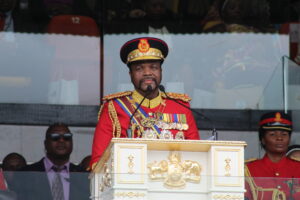
Within the broader 40-year reign of His Majesty King Mswati III, Malkerns has steadily evolved into a stronger urban centre while protecting the scenic and agricultural identity that has long defined it. Backed by local governance, better planning, safer public spaces, expanding trade, tourism activity, and a renewed focus on youth and enterprise, the town is shaping a growth path that blends character with opportunity.
Malkerns is proving that development does not always have to come at the expense of identity. In a country where progress is often measured through new infrastructure, expanding trade, and visible urban growth, the town is quietly shaping a model rooted in preserving what makes it distinct while steadily strengthening its economic and municipal foundations.
Long celebrated for its scenic setting, agricultural richness, and cultural vibrancy, Malkerns has increasingly grown beyond being simply a picturesque stop between larger centres. Since its formal establishment in 2012, the town has developed a firmer urban identity, supported by structured governance, improved planning, and a deliberate effort to turn its natural and agricultural strengths into long-term assets.
“Since its formal establishment in 2012, Malkerns has steadily built a stronger local governance base for planning, service delivery and community development.”
A stronger local foundation
The formal establishment of the Malkerns Town Board marked a turning point in the town’s development. It created a more localised governance structure through which rates and revenues could be channelled more deliberately toward operations, service delivery, and community development. That has helped lay the foundation for a town that is more organised, more responsive, and better positioned to manage its own growth.
This matters because urban progress is not only about visible construction. It is also about institutions that can plan, prioritise, and sustain development over time. In Malkerns, that institutional base is becoming increasingly important as the town balances expansion with the need to preserve its distinct “Green Belt” character.
“40 years of national leadership, and more than a decade of formal town administration, have helped position Malkerns as a growing urban node with a distinct Green Belt identity.”
Planning growth without losing the Green Belt
One of the clearest signs of that balance is the approved Town Planning Scheme, which provides a framework for structured zoning across residential, commercial, and industrial areas. Importantly, it also recognises the value of green spaces and public amenities, ensuring that growth does not erase the environmental and visual appeal that gives Malkerns its identity.
For a town known as part of Eswatini’s agricultural heartland, that balance is critical. The challenge is not simply to grow, but to grow in a way that protects the very qualities that make Malkerns attractive to residents, businesses, and visitors alike. In that respect, planning has become a tool not only for expansion, but for preservation.
“Growth in Malkerns is not only about expansion. It is about protecting green spaces, improving waste systems and building a more sustainable town.”
Safer streets, longer evenings
Public infrastructure is also beginning to reshape daily life in practical ways. The installation of solar-powered streetlighting has improved safety for residents and businesses while extending the hours of the evening economy. Better lighting means more confidence for movement after dark, greater functionality for local commerce and a stronger sense of public order in shared spaces.
These may seem like simple improvements, but they signal something larger: a town becoming more liveable, more active, and better equipped to support economic life beyond daylight hours.
“Solar-powered streetlighting is doing more than lighting roads; it is improving safety and extending the hours of Malkerns’ evening economy.”
A town of festivals, foot traffic, and visitor spending
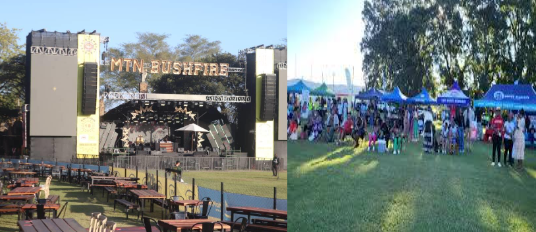
Malkerns has also strengthened its position as a destination for festivals, events, and agricultural shows. That role has brought wider economic benefits, driving accommodation demand, trade, and service-sector activity while drawing both domestic and international visitors into the area.
This growing events profile has helped place Malkerns more firmly on Eswatini’s tourism and cultural map. It has also reinforced the town’s role as a place where commerce, culture, and community intersect, generating foot traffic that supports local businesses and extends the town’s influence beyond its immediate boundaries.
“Annual festivals, agricultural shows and visitor traffic are increasingly turning Malkerns into a tourism and events economy with wider local spillover benefits.”
Retail growth and the rise of local enterprise
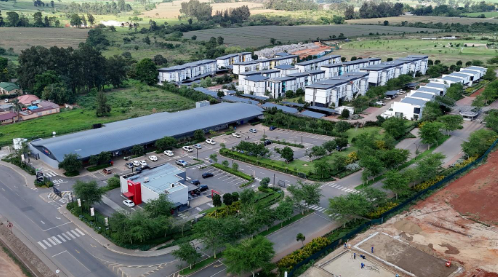
Retail and commercial development are becoming increasingly visible in the town’s growth story. The expansion of shopping complexes and business parks has created local employment, especially in retail and professional services, while Malkerns Square has added new shopping, dining, and entertainment options that strengthen the town’s commercial appeal.
At the same time, the local economy is not being shaped only by large developments. Through localised markets, trading permits, and educational support for informal traders, Malkerns is also helping smaller entrepreneurs move into more structured forms of business participation. That kind of support matters in towns where SME growth often becomes the bridge between informal hustle and sustainable enterprise.
“From localised markets to trading permits and trader education, Malkerns is creating clearer pathways for SMEs to move into more structured business participation.”
Farming remains central to the town’s future
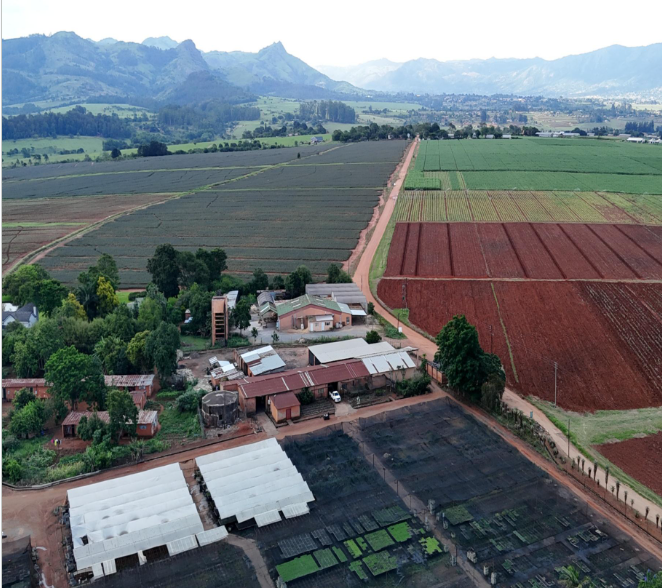
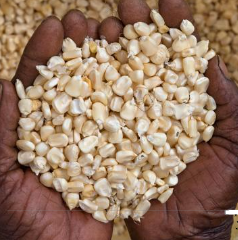
Even as retail, services, and tourism continue to grow, agriculture remains central to Malkerns’ identity and future. The town continues to build on its reputation as a breadbasket through both commercial and subsistence farming, while the conversation is increasingly shifting toward value addition and agro-processing.
The opportunities are broadening across five productive anchors — dairy, horticulture, macadamia, sugarcane, and pineapple.This means Malkerns is not only producing; it is also positioning itself to benefit more fully from the value chains connected to what it grows. In a town whose roots are deeply agricultural, that could prove to be one of the most important drivers of future economic resilience.
“Five productive anchors — dairy, horticulture, macadamia, sugarcane and pineapple — are shaping Malkerns’ push from farming strength to value-chain growth.”
Roads, waste systems, and the next chapter
Improved connectivity is another important part of the story. Strategic paving of internal roads and stronger links to the MR27 corridor are helping reduce transport costs for businesses and improve the movement of trade. Meanwhile, structured waste collection and separation initiatives are contributing to cleaner residential and commercial spaces, reinforcing the idea that sustainable development must include both growth and environmental responsibility.
Looking ahead, Malkerns appears focused on deepening partnerships with private investors and NGOs, modernising municipal operations through digital transformation, and creating wider opportunities for young people through skills development and entrepreneurship support. Taken together, these efforts point to a town not content to simply grow, but determined to grow with purpose.
“One strategic link to the MR27 corridor, combined with improved internal roads, is helping lower transport costs and smooth the movement of trade.”
A town growing without losing its soul
Perhaps that is what makes Malkerns stand out most clearly within the story of Eswatini’s progress over the past 40 years. Its development is not being driven by the abandonment of its agricultural heritage or scenic appeal. Instead, the town is turning those qualities into advantages, using planning, enterprise, and community-centred growth to shape a future that remains recognisably its own.
In that sense, Malkerns offers more than a local success story. It presents a broader development lesson: that growth is strongest when it builds on identity, not when it erases it. And as the Kingdom marks 40 years of His Majesty’s leadership, the town’s journey stands as part of that larger national story of continuity, adaptation, and forward movement.
Share this post
Subscribe to our newsletter
Keep up with the latest blog posts by staying updated. No spamming: we promise.