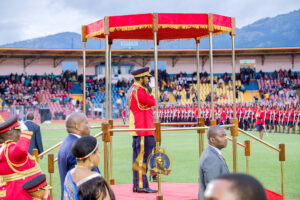
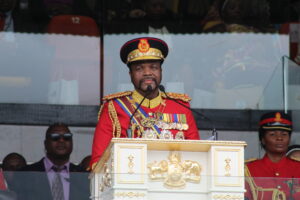
When His Majesty King Mswati III ascended to the throne in 1986, Eswatini’s infrastructure base was still in its formative stages. Connectivity between regions was uneven, major transport corridors were less developed, and many communities remained physically distant from centres of trade and opportunity. Four decades later, that picture has changed dramatically. The Kingdom today stands on a much broader infrastructure platform, shaped by expanded highways, stronger aviation links, a more strategic rail system, and sustained public investment that has helped bring people, markets, and services closer together.
Few institutions reflect that transformation more clearly than the Ministry of Public Works and Transport. Over 40 years, the ministry has played a central role in converting national vision into practical development, building the roads, airports, rail systems, and public facilities that now underpin mobility, competitiveness, and state service delivery across Eswatini.
From a modest network to a national growth platform
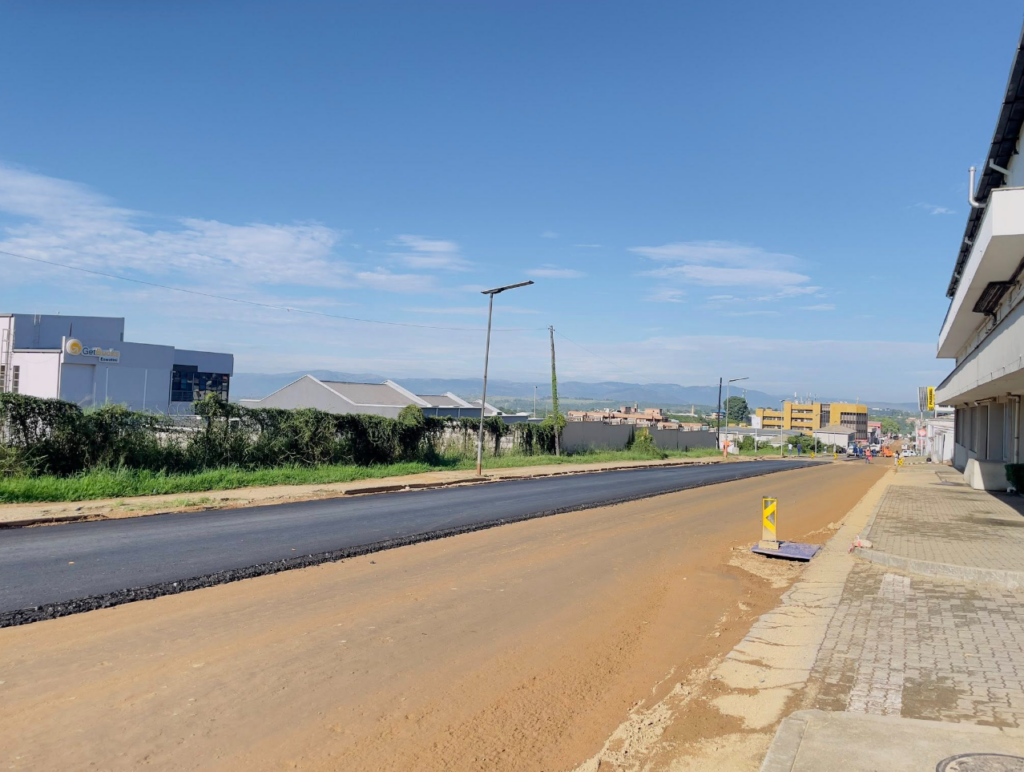
One of the clearest measures of progress is the country’s road network. In 1986, Eswatini had about 510 kilometres of paved roads. Today, that figure stands at 1,948 kilometres, with asphalt roads now accounting for 51 per cent of all gazetted roads. This expansion has done more than improve transport. It has helped connect rural producers to markets, workers to jobs, learners to schools, patients to health facilities, and businesses to wider economic opportunity.
“From about 510km in 1986 to 1,948km today, Eswatini’s paved road network has nearly quadrupled in 40 years.”
Among the most visible symbols of this transformation is the MR3 corridor, the Kingdom’s flagship highway linking the Ngwenya border through Mbabane and Manzini towards Lomahasha. Over time, 56 kilometres of this strategic corridor have been upgraded to four-lane motorway standard, turning a once-constrained route into a modern expressway. The Manzini Interchange has also emerged as a defining feature of a more modern and better-connected Eswatini.
Extending opportunity beyond the main highways
The infrastructure story is not only about flagship roads. It is also about extending opportunities to regions that were once less connected. The Nhlangano–Sicunusa road strengthened access in Shiselweni, while the D12 route improved connectivity towards the Mozambique corridor. In Hhohho, work on the feasibility and design of the Bulembu–Pigg’s Peak and Pigg’s Peak–Bulandzeni roads signals the next phase of expansion.
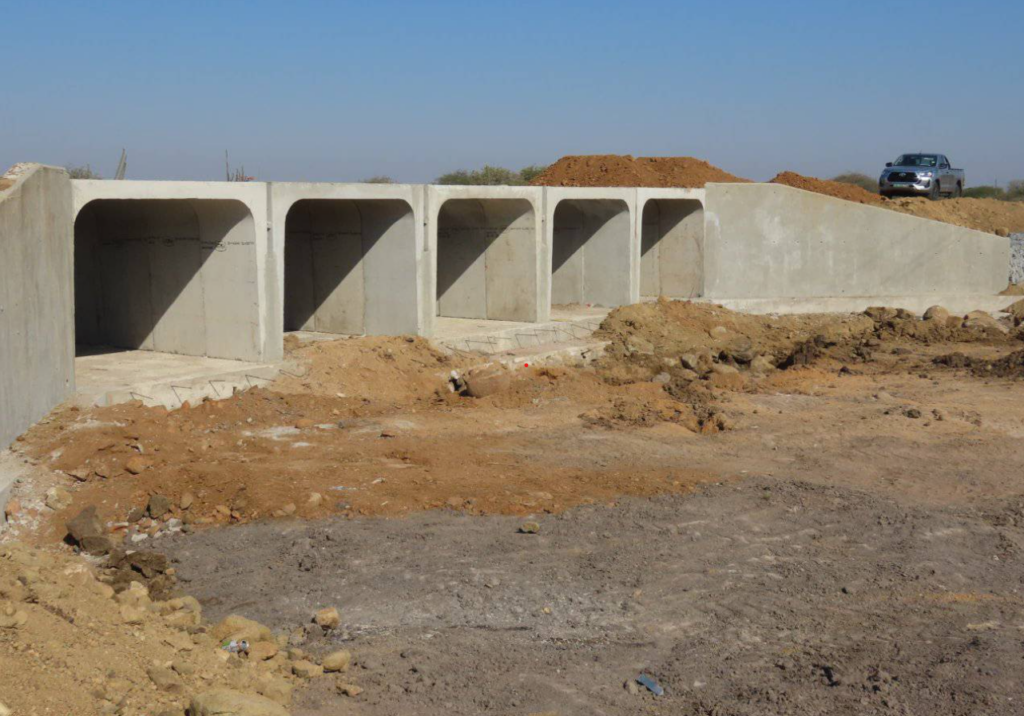
At the same time, feeder roads and low-level crossings have carried the benefits of public investment into rural communities, helping improve access in chiefdoms and settlements that depend on reliable transport links for economic and social activity. In this sense, infrastructure development has also been about inclusion, ensuring that progress is not confined to major urban corridors alone.
The next wave of road-building and reform
Eswatini’s infrastructure journey is still unfolding. The African Development Bank-backed Road Infrastructure Improvement Programme, valued at E2.4 billion, is set to rehabilitate 105.9 kilometres of roads and is expected to create about 200 direct jobs, including opportunities for youth and women. This points to a model of infrastructure that is not only developmental in physical terms, but also economically catalytic.
“An E2.4 billion AfDB-backed road programme will rehabilitate 105.9km of roads and is expected to create about 200 direct jobs.”
The broader ambition is to pave a further 500 kilometres by 2028 and raise the national paved road share to 60 per cent. Supporting this is a Roads Authority framework, backed by a 40-cent fuel levy and a Roads Authority Fund, designed to place road management on a more sustainable long-term footing.
Aviation and a more outward-looking Eswatini
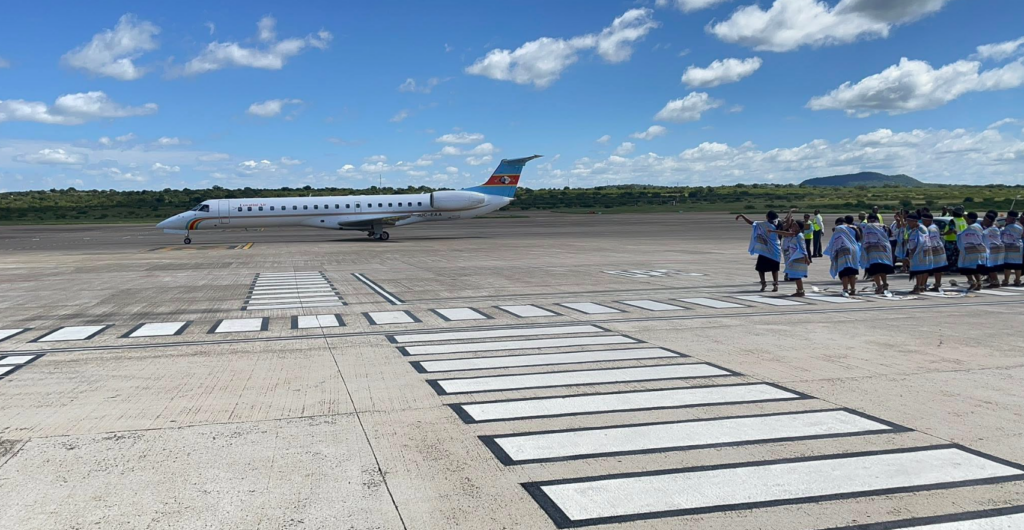
If roads have connected the Kingdom internally, aviation has strengthened its outward reach. The commissioning of King Mswati III International Airport in 2014 marked a major turning point in Eswatini’s global connectivity. Built with a CAT-1 runway, instrument landing capability, and the capacity to handle wide-bodied Code E aircraft, the airport gave the country infrastructure aligned with its ambitions in trade, tourism, and investment.
That progress deepened further with the launch of Eswatini Air’s first commercial flight on 26 March 2023. In its early phase, the airline recorded a 95 per cent on-time performance rate and 98 per cent schedule integrity. Between April and December 2024, it carried more than 73,926 passengers, representing a 34 per cent year-on-year increase.
“Eswatini Air carried more than 73,926 passengers between April and December 2024, while posting 95% on-time performance and 98% schedule integrity.”
These gains reflect more than operational efficiency. They signal a country positioning itself more confidently within the regional and global economy, using transport infrastructure as a tool to attract movement, trade, and opportunity.
Rail, freight, and the regional logistics vision
Rail remains one of Eswatini’s most strategic long-term assets. Major gains under the current reign include the completion of the northbound line in 1986 and the strengthening of the north-south corridor linking the Kingdom to regional freight routes. Today, freight moving between Durban and northern markets can use this route to cut distance by 270 kilometres and reduce transit time by up to three days.
“On the north-south rail corridor, transit can be cut by up to three days and distance reduced by 270km.”
Preliminary work on the Eswatini Rail Link has already included land preparation and the resettlement of 253 affected properties. Meanwhile, the Matsapha Inland Container Depot is earmarked for a phased E1 billion expansion to support warehousing, chilled cargo, and integrated road-rail-air freight systems. Together, these initiatives point to a future in which Eswatini is not only a transport user but an increasingly strategic logistics player in the region.
Beyond transport: building the physical presence of the state
The ministry’s contribution extends beyond movement alone. It also includes the buildings and facilities through which public service is delivered. Roads may connect the country, but government buildings, institutional housing, and service infrastructure give the state a physical presence in the daily lives of citizens.
A drawdown of E368 million from a planned ZAR2.4 billion loan facility is intended to accelerate the rehabilitation of government buildings and residential quarters for public servants. This reflects a broader understanding of infrastructure, not just as transport, but as the backbone of public administration, service delivery, and national functionality.
A nation in motion
Taken together, the Ministry of Public Works and Transport’s 40-year record is a story of ambition translated into physical reality. It is a story of roads that now carry more than traffic, airports that project national seriousness, railway lines that anchor logistics opportunity, and public facilities that extend the reach of the state.
Over four decades, infrastructure in Eswatini has become more than a development sector. It has become a visible expression of national progress, helping to connect the Kingdom internally, link it more effectively to regional markets, and position it for a more mobile, competitive, and integrated future.
Share this post
Subscribe to our newsletter
Keep up with the latest blog posts by staying updated. No spamming: we promise.