
Over the past four decades, the Ministry of Home Affairs has grown into one of the Kingdom’s most quietly important institutions. From immigration management and refugee protection to birth registration, citizenship services, and the coordination of national celebrations, the ministry has steadily expanded the meaning of citizenship in Eswatini.
Its journey mirrors the country’s own path under His Majesty King Mswati III’s reign: one marked by reform, inclusion, service delivery, and a deepening commitment to ensuring that every citizen is recognised, protected, and connected to the life of the nation.
Some ministries are defined by the roads they build or the infrastructure they oversee. Home Affairs is different. Its work is woven into the intimate architecture of citizenship itself, in the birth certificate that gives a child legal identity, the passport that opens movement, the border post that balances national security with public convenience, and the ceremonies that bind the nation together in moments of shared identity.
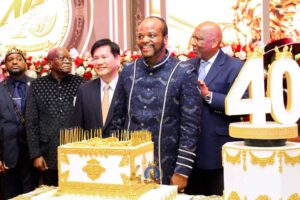
As Eswatini marks 40 years of His Majesty King Mswati III on the throne, the Ministry of Home Affairs stands out as one of the institutions that has steadily shaped how the state sees, serves, and includes its people.
“This celebration is not just an event; it is a reaffirmation of our identity, resilience and shared values as a nation.”
A ministry that grew with the nation
The Ministry of Home Affairs did not always carry the broad civic mandate it has today. In its earlier years, its functions were built largely around immigration, refugees, national celebrations, and sport. But as the needs of the country evolved, so too did the ministry.
A major turning point came in 2009 with the introduction of the Birth, Marriage, and Death department into its structure. This was more than a bureaucratic adjustment. It marked a shift in national thinking — an acknowledgment that legal identity, registration, and citizen documentation are not peripheral services, but central pillars of welfare, governance, and belonging.
That expansion helped redefine Home Affairs into the institution it is today: a ministry at the centre of how citizenship is recognised and protected in Eswatini.
From paper systems to modern immigration services
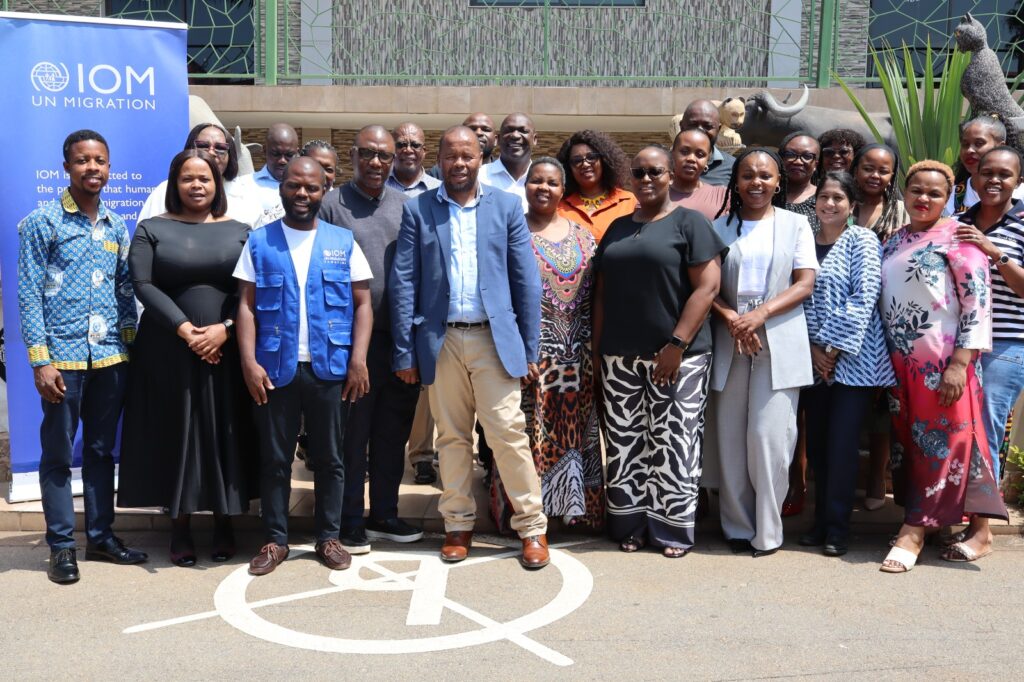
In 1986, immigration and civic administration relied heavily on manual, paper-based systems. Over time, the ministry introduced legislative reforms and automation to modernise operations and improve access.
Among the key milestones in this journey was the Swaziland Citizenship Act No. 14 of 1992, alongside the automation of services such as passports, permits, and citizenship certificates. These changes helped improve administrative efficiency and strengthen the ministry’s reach.
At ports of entry, the progress has also been tangible. Mhlumeni became a 24-hour border post in 2002, Ngwenya followed in 2021, while Lomahasha’s operating hours were extended to midnight. The gradual transfer of ports of entry management from the Royal Eswatini Police Service to immigration authorities, beginning at Ngwenya in 1997 and completed at Matsapha Airport in 2009, further strengthened border administration while improving service delivery.
The impact is not only operational, but measurable. Temporary permits now make the largest single contribution to immigration revenue, accounting for 46.6 per cent of collections, including new applications and renewals. The ministry also highlights a 24-hour turnaround time for travel documents as a benchmark of regional efficiency.
“Temporary permits continue to make the largest contribution to revenue at 46.6 per cent.”
Refugee protection rooted in compassion
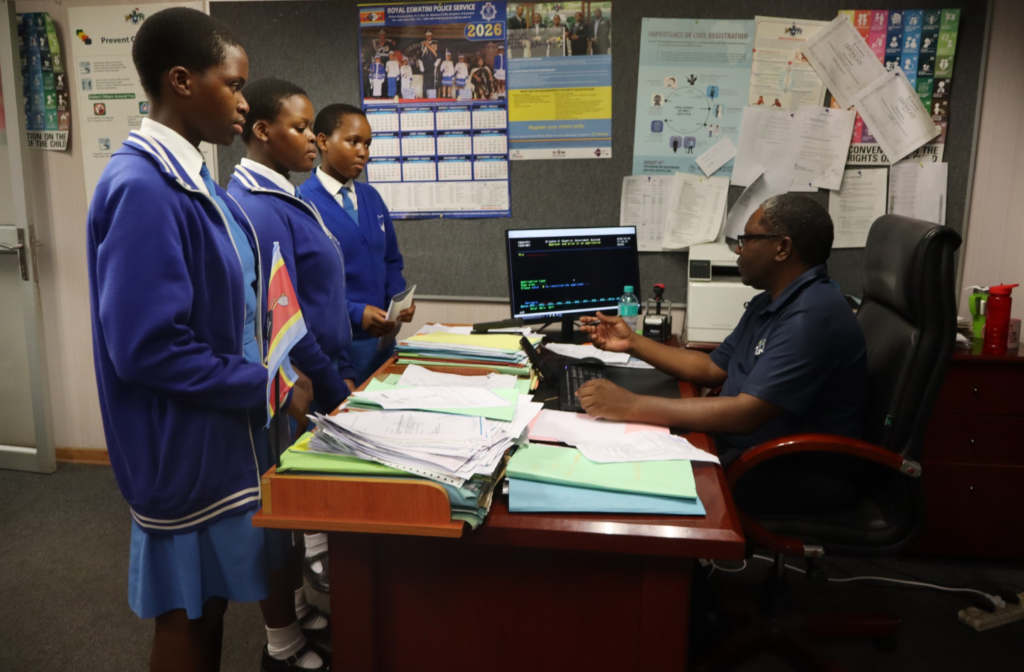
One of the clearest expressions of the ministry’s humanitarian role can be traced back to the Mozambican civil war in the mid-1980s, when Eswatini hosted and repatriated more than 25,000 Mozambican refugees through the Ndzevane Refugee Camp.
That response left a lasting mark on the country’s identity, positioning Eswatini as a nation willing to offer refuge in times of crisis while upholding values of solidarity, compassion, and human dignity.
Over time, this legacy has become more structured. The Refugees Act No. 15 of 2017 strengthened Eswatini’s asylum system and aligned it more closely with international human rights principles. Beyond legal protection, the government has also supported livelihoods and self-reliance through the Ndzevane Project and agricultural support initiatives.
The allocation of 1,095 hectares of land to support agricultural livelihoods for asylum seekers and refugees remains one of the clearest examples of this commitment.
The ministry has also placed Eswatini in a position of regional leadership by becoming the first country in SADC to adopt a National Action Plan aimed at eradicating and preventing statelessness, a significant milestone in advancing identity rights and legal inclusion.
“Eswatini became the first country in the SADC region to adopt a National Action Plan aimed at eradicating and preventing statelessness.”
Expanding identity from birth onward
Perhaps nowhere is the ministry’s impact more deeply felt than in the area of civil registration.
This journey stretches back to the Births, Marriages and Deaths Act of 1986, followed by the Identification Order of 1998 and the introduction of national identity cards in 2005. Over time, these systems were automated to improve access and efficiency.
But one of the most consequential recent reforms came with the Civil Registration Act of 2023, which replaced the 1986 law and introduced provisions designed to close long-standing gaps in legal recognition.
Among its notable changes is the provision allowing males to register children born out of wedlock, helping ensure that children can access legal identity regardless of their parents’ marital status. This is a critical step in broadening inclusion and reducing vulnerability.
The expansion of birth, marriage, and death registration, together with travel document services, into several Tinkhundla centres has also helped bring services closer to communities that previously faced distance and administrative barriers.
The nationwide Mopping Up campaign pushed this effort even further by taking registration services directly into chiefdoms. Through this exercise, more than 30,000 vulnerable emaSwati have received birth certificates for the first time, including a 117-year-old woman from Nkonka Chiefdom in Matsanjeni South.
“To date, over 30,000 vulnerable emaSwati have registered birth certificates for the first time.”
Another forward-looking intervention is the Closing of the Tap initiative, which seeks to ensure that legal identity begins at birth by registering newborns directly within health facilities. Registration offices have already been established in Mbabane, Piggs Peak, Mankayane, Hlathikhulu, Sithobelweni, Manzini, and Siteki.
Together, these reforms point to a ministry increasingly focused not only on documents, but on dignity, access, and the prevention of exclusion from the very start of life.
Preserving belonging through national life
The work of Home Affairs goes beyond administration. It also carries a symbolic and cultural role in sustaining national life.
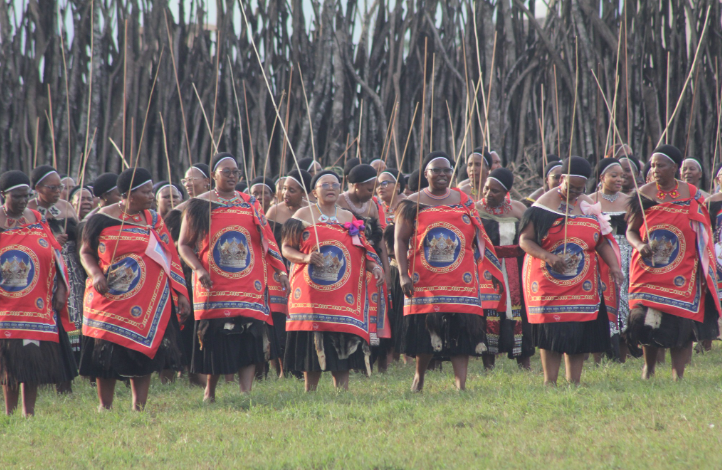
Through its coordination of National Prayers, Good Friday observances, King’s Birthday celebrations, Umhlanga, Buganu, and Incwala, the ministry helps preserve the public rituals through which Eswatini expresses unity, continuity, and shared heritage.
It has also worked to make these moments more inclusive by coordinating safe transport and essential support services, including mobile showers for regiments during major national events. In doing so, Home Affairs helps transform national celebrations from calendar fixtures into lived expressions of belonging.
A ministry that mirrors the nation’s journey
Taken together, the Ministry of Home Affairs’ achievements over the past four decades tell the story of an institution that has grown with the nation.
It has modernised immigration, widened access to legal identity, strengthened refugee protection, and preserved the rituals of national belonging. It has moved from paper systems to automation, from centralised services to broader community access, and from a narrow administrative role to a wider model of civic inclusion.
As Eswatini celebrates 40 years of His Majesty King Mswati III on the throne, the Ministry of Home Affairs can rightly be seen as one of the custodians of the Kingdom’s civic soul.
Its story is not only about permits issued, but also about borders managed or laws enacted. It is about ensuring that every citizen is seen, recognised, and included in the life of the nation.