For nearly four decades, the Eswatini Housing Board (EHB), fondly known as Luphahla, has played a quiet but foundational role in national development, helping transform housing from a basic urban response into a broader instrument of dignity, order, and community growth. Since its establishment on 1 March 1988, the Board has contributed to the creation of planned settlements, serviced land, rental housing, and institutional accommodation that have shaped the lives of thousands of emaSwati.
Some institutions change a nation loudly. Others do so one home, one plot, and one community at a time. The Eswatini Housing Board belongs firmly to the second category. Its contribution may not always dominate headlines, but its footprint can be seen in the structure of townships, the stability of rental communities, the dignity of civil servants’ housing, and the long-term expansion of planned urban development across the Kingdom.
“The Eswatini Housing Board has moved beyond simply managing housing stock to become one of the Kingdom’s most important instruments of structured urban development.”
From housing pressure to a national response
The origins of the Board are closely linked to Eswatini’s period of industrial growth between 1969 and 1978, when expansion in areas such as Matsapha, Ngwenya, and Nhlangano drew many people from rural communities into urban centres. Employment opportunities were increasing, but affordable housing infrastructure was not growing at the same pace. This created urgent demand for accommodation, especially for working families entering urban life for the first time.
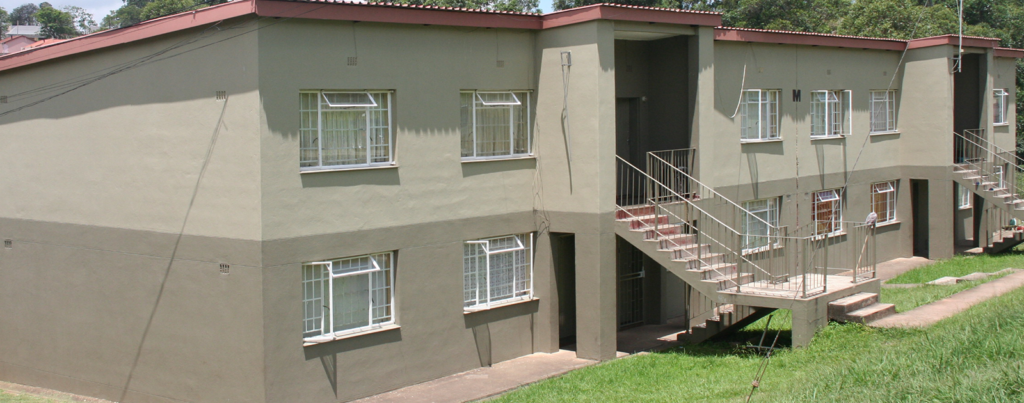
Early partnerships with private sector stakeholders, including Mhlume Sugar Company and Simunye Sugar Corporation, helped provide worker flats known as eMobeni. While these developments responded to immediate need, they also exposed the limitations of an uncoordinated housing system. The establishment of the Industrial Housing Company in 1978 marked an important early step toward formal housing management, with the creation of the Eswatini Housing Board in 1988 broadening that mandate from management to full-scale development.
Building planned communities, not just houses
Over time, the Board’s mission evolved from managing housing stock to shaping organised human settlements. Early developments such as the Sidwashini Extensions, the Msunduza Extensions, and the Two Sticks projects in Manzini, Nhlangano, and Siteki laid the foundation for a more structured model in which housing was supported by roads, sanitation, and water infrastructure.
This approach later expanded into larger township developments that extended the Board’s footprint across the country. Embangweni Township in Mbabane delivered more than 350 housing units between 1990 and 1993. Helemisi in Manzini added 86 homes, while Makholokholo contributed 332 residential plots and housing units. In Nhlangano, Nkhanini made more than 400 serviced plots available, while Mhobodleni supported infrastructure for over 300 plots. Mabuya Township in Ngwenya added another 98 homes. Together, these projects reflected a clear shift in philosophy: from isolated housing delivery to the creation of communities where people could live, grow, and thrive.
“The Board has shifted from managing housing stock to developing planned communities where people can live with dignity, safety and stability.”
Housing linked to infrastructure and economic life
One of the Board’s most significant contributions has been its understanding that sustainable housing cannot stand alone. It must be connected to infrastructure, planning, and commerce. That is visible in developments such as Msunduza Extension 4, where approximately 1,794 plots were serviced, and Sidwashini Extension 25, where more than 200 plots were formalised and allocated. The Two Sticks infrastructure upgrades across three regions expanded 552 serviced plots, while Thembelisha added another 27.
The Woodlands Extensions further demonstrated the Board’s integrated development model. Woodlands Extensions 1 and 2 introduced 430 modern residential developments, while the Woodlands Shopping Centre brought commerce into the broader housing ecosystem. In this way, the Board has helped create places where people do not merely sleep, but live fully, with access to services, roads, business opportunities, and community life.
A trusted rental portfolio
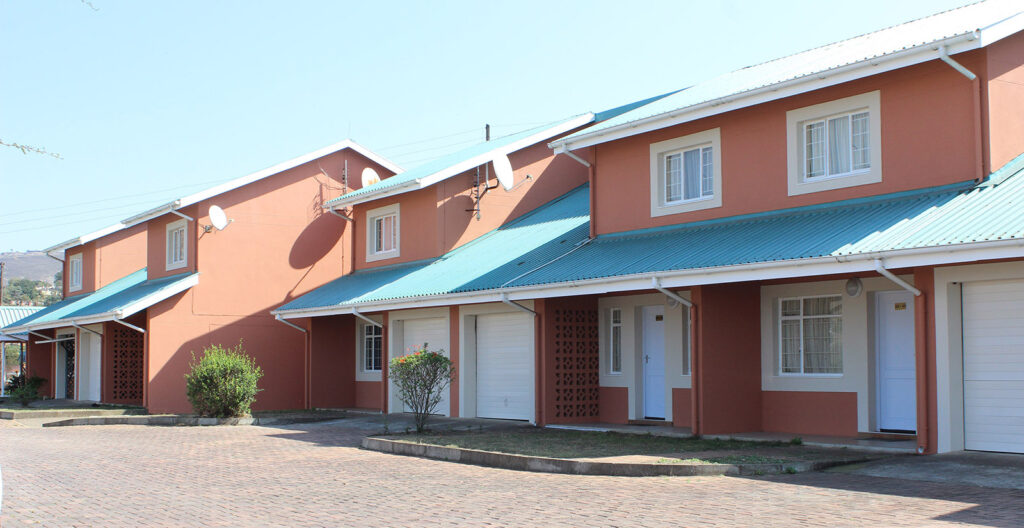
The Eswatini Housing Board continues to play a crucial role in the provision of rental housing. Today, it manages a residential rental portfolio of more than 1,033 units, with occupancy rates above 95 per cent. That sustained demand reflects not only the continued need for affordable accommodation, but also the level of trust that emaSwati continue to place in EHB-managed developments.
Its rental stock stretches across estates such as Matsapha’s old and new Mobeni units, Mbabane South, Mbangweni townhouses and flats, Kuyehlela, Enhlanhleni, and Eveni. Through regulated rental structures, the Board has helped keep housing accessible to working families, young professionals, and first-time urban residents, reinforcing the idea that housing is not merely a commodity but a platform for inclusion and opportunity.
“Today, the Eswatini Housing Board manages more than 1,033 residential rental units, with occupancy rates above 95 per cent.”
Housing those who serve the nation
One of the defining chapters in the Board’s history came in 2009, when His Majesty King Mswati III commissioned the Institutional Housing Project to address the housing backlog within the civil service. The project became one of the most consequential public housing interventions in recent decades.
It delivered 162 housing units for the Royal Eswatini Police Service, 132 units for His Majesty’s Correctional Services, 72 units for National Fire and Emergency Services, 188 units for Ministry of Health personnel, and 40 units under the KMIII Infrastructure and Housing Estate, together with essential road infrastructure. More than the numbers, the project represented a strategic investment in those who serve the nation daily, helping improve living conditions for officers, health workers, and emergency personnel while strengthening service delivery.
Economic value with a human legacy
The Board’s impact has also been felt in the economy. Through housing development, it has supported activity across construction, engineering, project planning, infrastructure, and local supply chains. To date, the Eswatini Housing Board has sold 4,939 plots and built 1,259 houses, with a combined contribution of E354,233,850 injected into the Eswatini economy.
Yet perhaps its most enduring contribution is social. Housing affects family stability, health, privacy, sanitation, safety, and long-term well-being. The Board’s legacy, therefore, extends far beyond bricks and mortar. It lives in the communities it has developed, the families it has stabilised, and the opportunities it has helped unlock over generations. The Mobeni Flats alone, first developed between 1975 and 1976 and comprising 1,033 housing units, remain one of the clearest symbols of this long-term social impact.
“To date, the Board has sold 4,939 plots and built 1,259 houses, injecting E354,233,850 into the Eswatini economy.”
A legacy that continues to house the nation
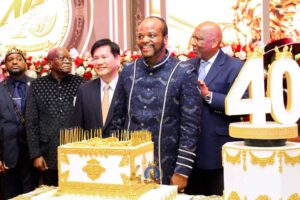
As Eswatini marks 40 years of leadership under His Majesty King Mswati III, the Eswatini Housing Board stands as one of the clearest examples of development made tangible in people’s everyday lives. From industrial housing management to the creation of planned communities, serviced land, rental housing, and institutional accommodation, the Board has shown that national progress is not only measured through grand infrastructure, but also through the dignity of a family with a secure place to call home.
In that sense, the Board’s mission remains as relevant today as it was at its founding: to house the nation, and in doing so, help build it.