
Over four decades, Eswatini’s health sector has evolved from a far more constrained system into a broader, better-equipped and increasingly decentralised network of care. The gains are visible in stronger infrastructure, wider access to services, digital innovation, mobile screening, and an HIV response that has earned global recognition. Most telling of all is the human outcome: life expectancy has risen from 32 years to 65 years during the reign of His Majesty King Mswati III.
When His Majesty King Mswati III ascended the throne in 1986, Eswatini’s health system faced far greater limitations in infrastructure, reach, and specialist care than it does today. Four decades later, the transformation is visible across the country in the expansion of public health facilities, the decentralisation of services, the introduction of specialist treatment, and the adoption of technology that is bringing care closer to the people.
This progress has been built over time through sustained investment, policy direction, and a national commitment to making healthcare more accessible, more resilient, and more responsive to the needs of ordinary Swati. Public health institutions have expanded in both scale and capability, enabling the country to better respond to disease burdens, public health emergencies, and the demands of a growing population.
“During His Majesty’s reign, life expectancy in Eswatini has risen from 32 years to 65 years.”
The strongest evidence of that transformation lies in the lives of the people. During His Majesty’s reign, life expectancy has risen from 32 years to 65 years. That is more than a statistic. It reflects lives extended, families strengthened, and a health system that has steadily grown in confidence and capacity.
Expanding access, strengthening infrastructure
One of the clearest indicators of progress is the scale of service delivery. The government now operates about 122 fully funded public health facilities across the country, including 104 clinics. This has helped bring primary healthcare closer to communities, reducing the burden of travel and widening access to essential services.
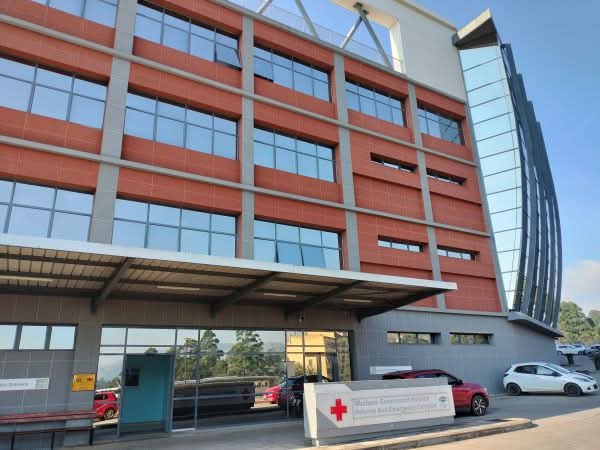
The quality of care environments has also improved significantly. New clinics have been constructed, older facilities have been renovated, and referral institutions have been strengthened to handle more complex cases. Mbabane Government Hospital, for example, now includes a new Outpatient Department building, a Neonatal ICU, and a Referral and Emergency Complex with modern theatres. These developments are not only improving service delivery but are also reshaping the patient experience and strengthening referral pathways within the country.
“Government now operates about 122 fully funded public health facilities nationwide, including 104 clinics.”
Healthcare infrastructure has therefore become one of the clearest symbols of national transformation. What was once a more limited service footprint has grown into a stronger nationwide public system, with care increasingly available closer to where people live.
Financing a healthier nation
Transformation on this scale requires sustained funding. The health sector currently receives around 13 percent of the national budget, placing Eswatini close to the 15 percent benchmark sought within the East, Central, and Southern Africa region. That allocation reflects national recognition that healthcare is not only a social service, but a strategic investment in productivity, resilience, and long-term development.
A well-financed health system is better able to recruit and equip staff, maintain infrastructure, introduce new services, and respond to emerging threats. In practical terms, this sustained investment has helped move Eswatini beyond a basic platform of care towards a more modern and responsive system.
“The health sector currently receives around 13% of the national budget, close to the 15% regional benchmark.”
His Majesty himself captured the national imperative in the 2026 Speech from the Throne, declaring: “A productive nation is a healthy nation. Achieving a healthy nation is an enormous task.”
Broader services, deeper care
The gains in healthcare are not only visible in the number of facilities, but also in the range of services now available. Over the years, Eswatini has introduced specialist services that would once have been difficult or impossible for many citizens to access. These include oncology, urology, renal dialysis, radiology, intensive care, neonatal intensive care, eye care, and a broad range of HIV testing, treatment, and prevention services.
Crucially, many of these services have increasingly been decentralised to regional hospitals, health centres, and clinics. This has reduced the distance patients must travel for diagnosis, treatment, and follow-up, while strengthening care at the community level. In a country where access can determine outcomes, decentralisation has become one of the most meaningful shifts in the health system over the past four decades.
Two funding instruments have also played a notable role in extending access. Through the Phalala Fund, tens of thousands of emaSwati have reportedly been able to access specialised medical services at no cost to themselves. The End Malaria Fund, meanwhile, has strengthened multisectoral collaboration and domestic resource mobilisation in support of the country’s malaria elimination ambitions.
“Tens of thousands of EmaSwati have reportedly accessed specialised medical services through the Phalala Fund at no cost to themselves.”
Innovation bringing care closer
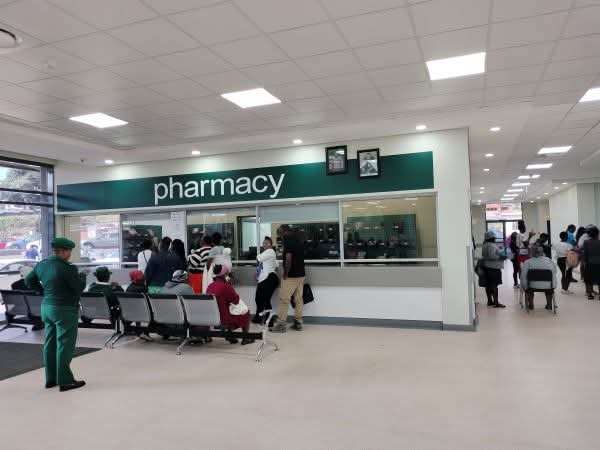
Technology has become an increasingly important part of Eswatini’s healthcare transformation. The introduction of the Client Management Information System has improved continuity of care by making patient information and medical history more readily available to health workers. This strengthens treatment decisions, referrals, and the overall quality of care.
Innovation is also visible beyond the walls of hospitals and clinics. The government has procured four cervical cancer screening trucks and four tuberculosis screening trucks equipped with AI-assisted diagnostic technology and X-ray machines. Operating across the country, these mobile units are helping bring advanced screening services directly into communities, improving early detection and supporting better treatment outcomes.
“Eswatini has procured four cervical cancer screening trucks and four TB screening trucks equipped with AI-assisted diagnostics and X-ray machines.”
These innovations speak to a health system that is becoming more proactive, more citizen-centred, and better able to reach people where they are. They also support service delivery during national events, extending their value beyond routine healthcare alone.
The HIV response that changed the national story
Few chapters illustrate the resilience of Eswatini’s health system more powerfully than the country’s response to HIV. At one stage, the country carried one of the heaviest HIV burdens in the world, contributing to a sharp decline in life expectancy in the early 2000s. Yet over time, Eswatini turned that crisis into one of Africa’s most recognised public health success stories.
Through strong leadership, sustained partnerships, and the rapid scale-up of treatment and prevention programmes, Eswatini became the first country in the world to achieve the UNAIDS 95-95-95 target, and has since gone beyond it. Antiretroviral therapy has enabled people living with HIV to live longer and healthier lives, while prevention options have expanded to include PrEP tablets, the PrEP ring, and long-acting injectable options such as Cabotegravir and Lenacapavir.
“Eswatini became the first country in the world to reach the UNAIDS 95-95-95 HIV target — and has since gone beyond it.”
The country’s progress in preventing mother-to-child transmission is especially significant. Eswatini reduced the transmission rate from 6.3 percent in 2017 to 1.34 percent in 2025, well below the 5 percent 2030 target for SADC states. HIV-free survival among HIV-exposed infants has also reached 95.9 percent. These are not just technical achievements. They are a reflection of what becomes possible when maternal health, child health, and HIV services work together effectively.
“Mother-to-child transmission fell from 6.3% in 2017 to 1.34% in 2025, while HIV-free survival among exposed infants reached 95.9%.”
A stronger system, a healthier future
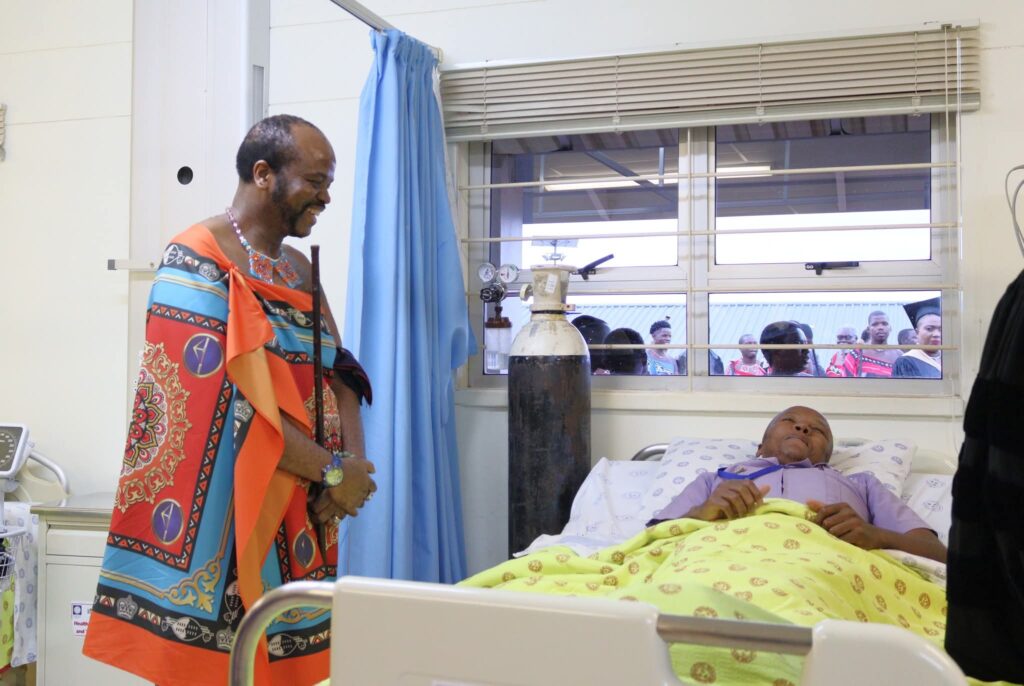
The progress made in Eswatini’s health sector over the last 40 years reflects more than institutional growth. It tells the story of a nation steadily building a broader platform for equitable, affordable, and increasingly accessible healthcare. It is a story seen in expanded infrastructure, improved referral systems, specialist care, digital tools, mobile screening, and a globally recognised HIV response.
There is still work ahead, as there is in every health system. But the direction is clear. Eswatini has laid strong foundations for a healthier future, and the gains already made continue to shape the next chapter of national development. In commemorating 40 years of His Majesty’s reign, the health sector stands out as one of the clearest examples of transformation with direct human meaning: lives extended, services expanded, systems modernised, and hope brought closer to the people.
“The health story is one of lives extended, services expanded, systems modernised and hope brought closer to the people.”