How four decades of growth, planning, and civic investment transformed the Kingdom’s administrative centre into a dynamic urban capital
When His Majesty King Mswati III ascended to the throne in 1986, Mbabane was still largely defined as an administrative town. In the decades that followed, and especially after the conferral of city status in 1992, the capital steadily expanded its civic authority, urban footprint, and development ambition. Today, the City of Mbabane stands as a centre of governance, commerce, planning, social services, and regional cooperation, a capital whose transformation mirrors the broader national story of growth and modernisation.
The turning point came in 1992, when His Majesty officially conferred city status upon Mbabane, creating a new chapter in the urban history of Eswatini. The proclamation gave rise to the Mbabane City Council, with the late Mr Titus Msibi appointed as the inaugural Mayor, the first person to hold such office in the Kingdom. At first, the Council was constituted through appointment in order to establish the foundations of governance. Later, elected councils brought residents more directly into the life of the city, strengthening participation, accountability, and local ownership.
That institutional shift did more than change a title. It gave Mbabane the platform to grow from a modest administrative centre into a more confident and increasingly sophisticated urban capital. Over the past four decades, the city has expanded in population, widened its road network, extended social services, improved environmental management, formalised settlements, and attracted a new wave of commercial, educational, and international partnerships.
”City status in 1992 marked a defining milestone in Mbabane’s modern growth story.”
A city that learned to govern and grow
Mbabane’s transformation is first and foremost a governance story. The transition from an appointed council to elected councils signalled a deeper move toward participatory local government. That evolution strengthened stakeholder engagement and helped the city develop both institutional capacity and civic stature.
At the same time, the city increasingly positioned itself beyond its borders. Through strategic partnerships such as the Umsebe Accord in the SADC region, the long-standing sister-city relationship with Fort Worth in the United States, and links with Taipei, Kaohsiung, Maputo, Matola, Mbombela, and Nkomazi, Mbabane built a stronger external profile. These partnerships opened doors to cultural exchange, technical cooperation, urban benchmarking, education, and investment conversations. In the process, Mbabane began to project itself not simply as the administrative seat of government, but as a city with regional and international relevance.
MBABANE AT A GLANCE
• City status conferred in 1992.
• Population grew from about 38,290 in 1986 to over 60,691 in 2017.
• Recent municipal estimates place the current population at between 80,000 and 95,000.
• The city accounts for about 25% of Eswatini’s urban population.
• About 54% of residents are under 20 and nearly 90% are below 50.
Infrastructure that changed daily life
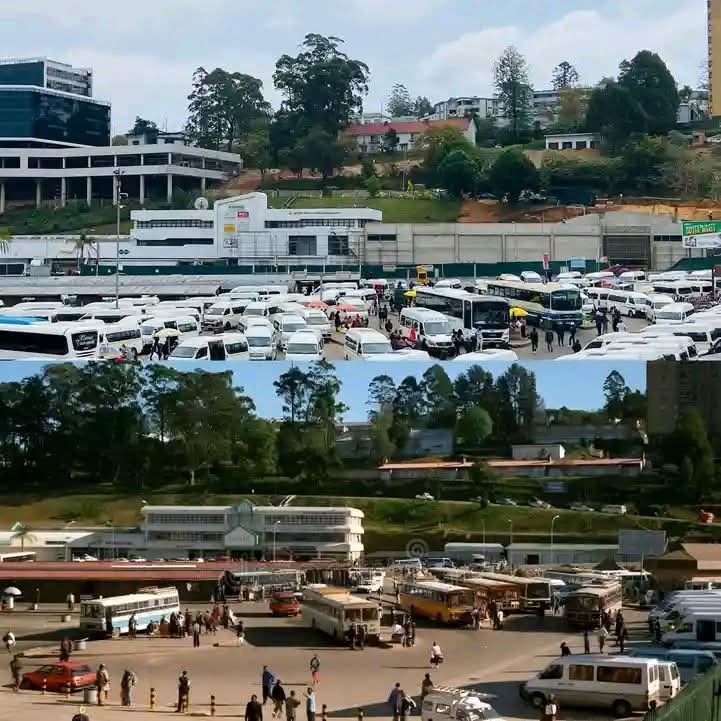
A modern city is built through systems that people use every day, and this is where Mbabane’s transformation becomes especially visible. Across the years, the Council undertook major road construction and rehabilitation projects to improve mobility, access, and traffic flow. Strategic corridors such as Dr Sishayi Road were widened to four lanes, including bridge widening, while sections of Sozisa Road and a long list of urban streets were constructed, upgraded, or rehabilitated. The effect of such work is not merely aesthetic. Better roads improve connectivity between neighbourhoods, reduce travel delays, and support commerce across the city.
Urban development also extended into township upgrading and housing expansion. Through the Urban Development Programme, areas such as Nkwalini Zone 4 and Mahwalala Zones 2 and 6 were opened up for more structured growth, while Msunduza Township was developed in partnership with the Eswatini National Housing Company. Previously unsurfaced township roads in areas including Sidwashini South, Fonteyn, and Mountain Drive were serviced and improved, bringing infrastructure closer to communities that had long been underserved.
Environmental management formed another important layer of urban modernisation. The construction of a modern landfill facility strengthened waste management and environmental sustainability, while stormwater infrastructure was developed in critical commercial zones, including the Spar precinct, the Portuguese Club area, the New Mall development zone, and the Swazi Plaza area. These are the kinds of investments that may not always dominate headlines, but they are essential to how a city functions — especially as population density and development pressure increase.
”Mbabane’s growth is visible in the roads, drainage systems, serviced townships, and civic infrastructure that support everyday urban life.”
A capital city with a social heart
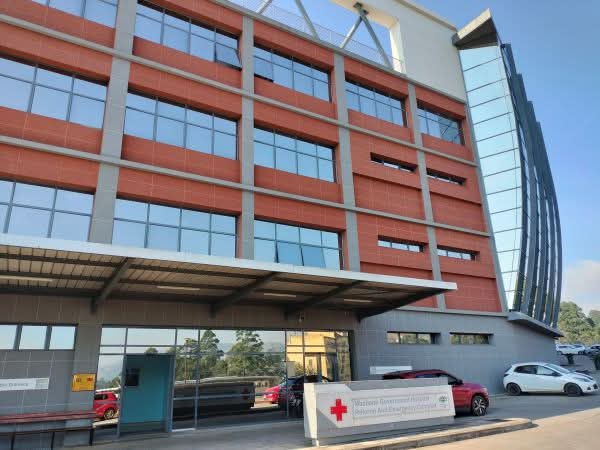
Mbabane’s progress has also been measured by the growth of social and public health services. The city established a fully accredited Public Health Laboratory to strengthen surveillance capacity, while a municipal clinic has continued to provide free primary healthcare and HIV/AIDS support to underserved residents. This is a significant expression of urban service delivery: a capital city that is not only growing commercially but also extending care to vulnerable communities.
The Council also developed a network of nine social centres, creating community hubs for poverty alleviation, child protection, and Early Childhood Care and Development. In the area of food safety and public regulation, Mbabane pioneered the Mbabane Abattoir to centralise meat safety and enacted the 2001 Sanitation Byelaws, which introduced the country’s first sophisticated Food Premises Grading System for public transparency. These achievements show a city authority broadening its mandate from basic administration to integrated social wellbeing.
Planning for a bigger, younger, and more ambitious city
Over the past 40 years, Mbabane’s population has risen from approximately 38,290 in 1986 to more than 60,691 in 2017, with recent estimates placing the number of residents between 80,000 and 95,000. That growth has been driven by rural-to-urban migration, the expansion of peri-urban areas and the gradual formalisation of informal settlements. The city now accounts for roughly a quarter of Eswatini’s urban population, confirming its strategic national importance.
The city’s youthful demographic profile has added urgency to planning. With about 54% of residents under the age of 20 and nearly 90% below the age of 50, pressure on land, housing, infrastructure, transport, and employment opportunities continues to grow. Mbabane’s response has been to push forward with township establishment, settlement upgrading, and stronger planning controls.
Among the established townships highlighted in the report are Bon Accord Estate, Woodlands Phases 1 and 2, Mbangweni, Makholokholo, Malagwane, Mvakwelitje, and Fonteyn, which was declared and gazetted as a township in 2026. Other areas under development through the Urban Development Programme include Mahwalala Zone 6C, Nkwalini Zone 3, Sidvwashini, Sitibeni, Manzana, Mangwaneni, PTS/Macobolane, Mncitsini, and Gobholo. The significance of these programmes lies not only in physical growth, but in the formalisation of land rights through serviced plots, title deeds, 99-year leaseholds, and a more functional property market.
The city has also advanced a broader planning reform agenda through the ongoing Town Planning Scheme Review, including the Structure Plan, Development Plan, Inner City Urban Design Framework, and Development Code. Added to this is the integration of GIS and spatial data systems, stronger enforcement of zoning and land-use controls, and alignment with wider national and international planning frameworks. Together, these measures point to a city thinking more deliberately about sustainability, structure, and resilience.
Commercial momentum and a wider urban footprint
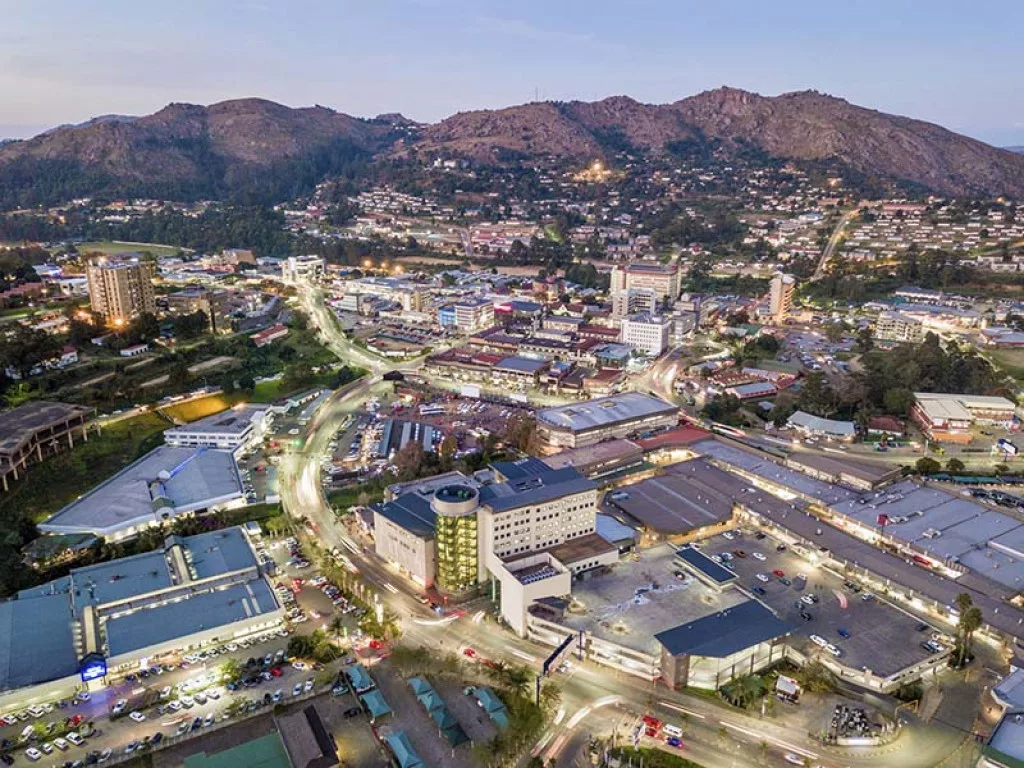
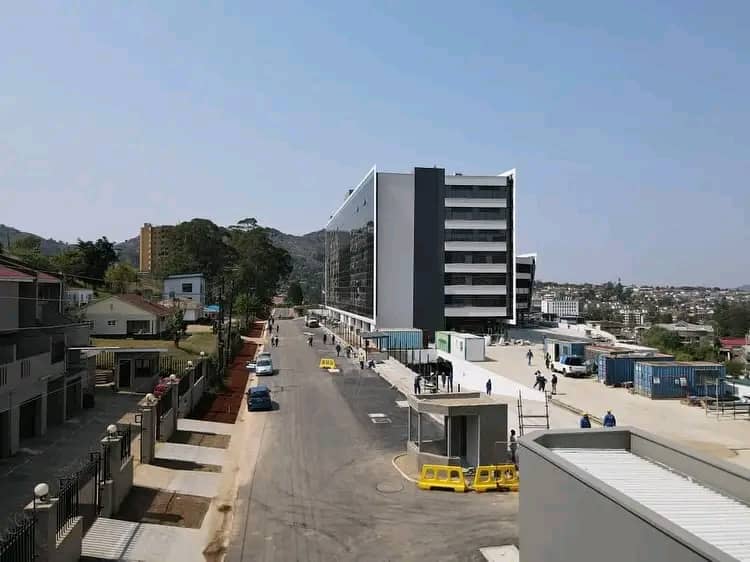
One of the clearest markers of Mbabane’s transformation is the changing urban landscape itself. Over the years, the city facilitated major developments that signalled a shift from a mainly administrative centre to a mixed-use commercial capital. The emergence of Corporate Place in 2010 introduced high-rise commercial development. This was followed by the Bridge Shopping Centre and revitalisation of the Gwamile corridor in 2016, the Hilton Garden Inn between 2016 and 2019, the FINCORP Building in 2019, and the completion of the SASCCO Centre in 2025.
Growth has not been confined to the central business district. The rise of Woodlands Shopping Centre in 2017, Msunduza Shopping Centre in 2023, and Boxer Superstore in 2025, an investment valued at E40 million, reflects a more decentralised, multi-nodal urban structure. This pattern reduces pressure on the CBD while bringing economic activity, retail access, and services closer to residential communities.
Mbabane has also strengthened its role as a knowledge and skills hub. The establishment of Limkokwing University of Creative Technology in 2011 and Eswatini Medical Christian University in 2012 expanded the city’s higher education infrastructure and reinforced its role as a centre of youth development, innovation, and human capital formation. These institutions have also stimulated demand for student accommodation, services, and supporting infrastructure, creating wider spillovers into the urban economy.
“Mbabane’s story is one of structured growth, urban investment and a more confident capital identity.”
The city we are still building
Mbabane’s 40-year journey is not without challenges. The report acknowledges rapid urbanisation, limited infrastructure funding, informal land allocations, delays in township establishment, and housing affordability constraints. Yet the same document also makes clear that the city has drawn important lessons from this experience: secure tenure unlocks investment, upgrading informal settlements is often more effective than relocation, integrated planning matters, and data-driven systems are essential to modern urban management.
That is what gives Mbabane’s story its lasting relevance in this commemorative moment. It is the story of a capital that has steadily grown in authority, reach, and ambition under His Majesty’s reign, a city that continues to balance heritage, governance, social service, economic opportunity, and urban reform as it prepares for the future.