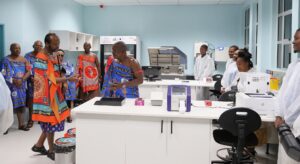
| Over four decades, Eswatini’s health sector has moved from a far more constrained system to a broader, better-equipped and increasingly decentralised network of care. The gains are visible in stronger infrastructure, a wider package of services, digital innovation, mobile screening, and an HIV response that has earned global recognition. The result is a healthier nation, reflected most clearly in life expectancy rising from 32 years to 65 years during His Majesty King Mswati III’s reign. |
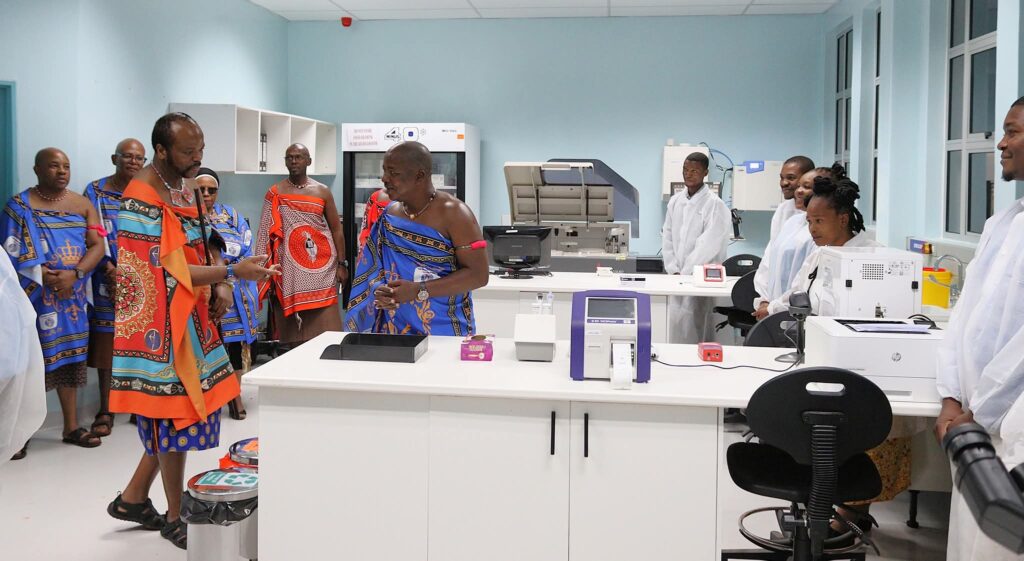
When His Majesty King Mswati III ascended the throne in 1986, Eswatini’s social and economic landscape was markedly different from what it is today. Nowhere is that transformation more visible than in the health sector, where decades of investment, policy direction and system-building have steadily widened access to care and strengthened the country’s capacity to respond to disease, public health emergencies and the needs of a growing population.
The progress has not happened in isolation. It has been driven by a long-term national commitment to making healthcare more accessible, more resilient and more responsive to the people it serves. Public health facilities have expanded in reach and capability, specialist services have been introduced, lifesaving technologies have been adopted and critical interventions have been decentralised so that communities no longer have to travel as far for essential care.
Most striking of all is the human impact of that transformation. Over the course of His Majesty’s reign, life expectancy has risen from 32 years to 65 years. That is more than a statistic. It is a measure of lives extended, families strengthened and a health system that has grown in both scale and confidence.
| “Over the course of His Majesty’s reign, life expectancy has risen from 32 years to 65 years.” |
Where the transformation is most visible
One of the clearest markers of change is the scale of public health service delivery. Government now operates about 122 fully funded health facilities nationwide, including 104 clinics. That network has helped bring primary healthcare closer to communities, lowering the cost and burden of travel for ordinary emaSwati seeking essential services. It also signals a major shift from a more limited service footprint to a stronger, nationwide public system.
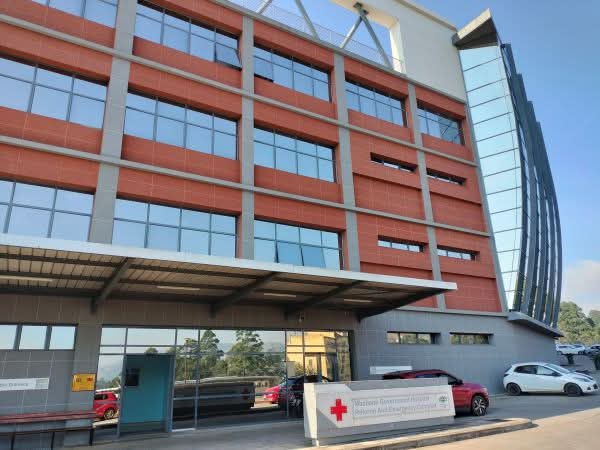
The physical quality of care environments has also improved. New clinic structures have been built, older facilities have been renovated and key referral institutions have been strengthened to handle more complex needs. Mbabane Government Hospital, for example, now has a new Outpatient Department building, a Neonatal ICU and a Referral and Emergency Complex that includes theatres built to a high standard.
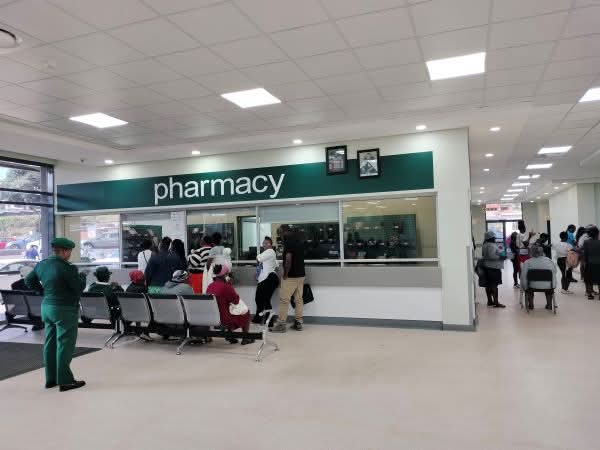
These facility upgrades matter because they change the patient experience in very practical ways. They make it easier to receive care closer to home, improve referral pathways, and expand the type of treatment that can be offered within the country. They also reflect a broader vision: healthcare not only as a social service, but as national infrastructure.
| AT A GLANCE• Life expectancy increased from 32 years to 65 years.• Health receives about 13% of the national budget, close to the ECSA 15% benchmark.• Government operates about 122 fully funded public health facilities nationwide.• Of these, 104 are clinics bringing essential care closer to communities. |
Funding the vision of a healthier nation
Healthcare transformation depends on sustained financing, and in recent years the Ministry of Health has continued to receive a sizeable share of the national budget. The current allocation stands at around 13% of the national budget, placing Eswatini close to the 15% benchmark sought within the East, Central and Southern Africa region.
That level of commitment is significant because a well-financed health sector is better able to expand services, recruit and equip staff, maintain infrastructure and respond to emerging threats. In practical terms, it supports the move from a basic service platform to a more modern and resilient system capable of improving outcomes at both household and national level.
| “A productive nation is a healthy nation. Achieving a healthy nation is an enormous task.”–His Majesty King Mswati III, Speech from the Throne 2026. |
Broader services, deeper care, better reach
The gains in health are not only about the number of facilities. They are also about what those facilities can do. Over the years, Eswatini has introduced a wider package of services in public facilities, including specialist care that previously would have been difficult or impossible for many citizens to access. Oncology, urology, renal dialysis, radiology, intensive care, neonatal intensive care, eye care, HIV testing, HIV treatment and prevention services are among the notable additions mentioned in the draft ministry article.
Importantly, many of these services have increasingly been decentralised to regional hospitals, health centres and clinics. That decentralisation has been one of the most meaningful changes in the health system, because it brings diagnosis, treatment and follow-up closer to the communities where people live.
Two strategic funding instruments also stand out in this journey. Through the Phalala Fund, tens of thousands of emaSwatini have reportedly accessed specialised medical services at no cost to them, receiving care that would otherwise have been beyond their financial reach. The End Malaria Fund, meanwhile, has strengthened multisectoral collaboration, mobilised domestic resources and added momentum to the ambition of a malaria-free Eswatini.
Technology is changing how care reaches the people
Another defining feature of the health sector’s transformation has been the growing use of technology to improve diagnosis, treatment and service delivery. The introduction of the Client Management Information System has helped modernise patient care by making client data and medical history more readily available to health workers, improving continuity of care, referrals and the overall experience within facilities.
Innovation is also visible beyond the walls of hospitals and clinics. Eswatini has invested in mobile diagnostic platforms designed to bring services closer to communities rather than forcing communities to come to services. Government has procured four cervical cancer screening trucks and four tuberculosis screening trucks equipped with AI-assisted diagnostic technology and X-ray machines. Operating across the regions, these mobile units are helping detect disease earlier and improve treatment outcomes by identifying cases before they become more advanced.
The significance of these trucks lies not only in their technology, but in what they represent: a health system that is becoming more proactive, more mobile and more citizen-centred. They also support healthcare delivery during national events, extending the benefit of these innovations to both emaSwatini and visitors.
| HEALTH INNOVATIONMobile screening assets highlighted in the draft:• 4 cervical cancer screening trucks• 4 TB screening trucks with AI-assisted diagnostics and X-ray machinesSuggested design use: narrow vertical fact box beside the technology section. |
The HIV response that changed the national story
If one chapter best illustrates the resilience and maturity of Eswatini’s health system, it is the national response to HIV. At one point, the country’s HIV burden placed it at the top of global prevalence statistics and contributed to a sharp decline in life expectancy, particularly in the early 2000s. Yet over time, Eswatini turned that crisis into one of the most recognised public health responses on the continent.
Through strong leadership, partnerships with international organisations and the rapid adoption of treatment and prevention interventions, Eswatini became the first country in the world to reach the UNAIDS 95-95-95 target — and has since gone beyond it. Antiretroviral therapy was scaled up, giving people living with HIV the chance to live longer and healthier lives, while prevention strategies continued to evolve with the introduction of PrEP tablets, the PrEP ring and long-acting injectable options such as Cabotegravir and Lenacapavir.
The country’s progress in prevention of mother-to-child transmission is especially notable. Eswatini has reduced the mother-to-child transmission rate from 6.3% in 2017 to 1.34% in 2025, way below the 5% target of 2030 for SADC states, while achieving HIV-free survival of 95.9% among HIV-exposed infants. These results place the country close to the elimination threshold and show what is possible when treatment, maternal health and child health systems work in concert.
| “Eswatini became the first country in the world to hit the UNAIDS 95-95-95 global HIV target a decade ahead of the 2030 deadline.” |
Leadership, advocacy and the future we are building
The ministry draft also underscores the role of advocacy: not only for stronger health systems, but for responsible use of prevention tools, especially among young people. That public messaging matters because health transformation is not built on infrastructure alone. It also depends on awareness, trust, behaviour change and the consistent encouragement of citizens to make use of available services.
Taken together, the gains in facilities, financing, technology, specialist care and HIV prevention show a sector that has become stronger and more resilient over four decades. There is still work to do, as there is in every health system. But the direction of travel is clear. Eswatini has built a broader platform for equitable, affordable and increasingly accessible healthcare, and that platform is now shaping the next chapter of national progress.
In a commemorative supplement marking 40 years of His Majesty’s reign, the health story stands as one of the clearest examples of transformation with human meaning. It is the story of lives extended, services expanded, systems modernised and hope brought closer to the people.
| FAST FACTS• 13% of the national budget allocated to health.• About 120 fully funded public health facilities nationwide.• 104 clinics delivering community-level access.• 4 cervical cancer screening trucks and 4 TB screening trucks.• Life expectancy improved from 32 to 65 years.• MTCT rate reduced to 1.34%; HIV-free survival among exposed infants at 95.9%. |