Over the past 40 years, the Ministry of Labour and Social Security has grown into one of Eswatini’s most important institutions for human development, helping to shape a nation where work, protection, and opportunity increasingly go hand in hand. From strengthening labour laws and workplace safety to expanding scholarships, artisan training, rehabilitation services, and social security reform, the ministry’s journey reflects a broader national story of inclusion, resilience, and progress.
When His Majesty King Mswati III ascended the throne in 1986, many of the systems that now support workers, students, job seekers, and persons living with disabilities were either limited, fragmented, or still in their infancy. Labour administration existed, but without the coordinated structure now in place. Social security reform was still modest, occupational safety and health had not yet been modernised through a dedicated national law, and public service tools such as digital scholarship applications, career expos, and workplace wellness policies were still absent.
“The ministry’s growth has not simply been administrative. It has been about building systems that touch people’s lives directly.”
Building a Ministry with National Reach
A major milestone came in 2009 with the formal establishment of the Ministry of Labour and Social Security through Legal Notice No. 25 of 2009. This brought labour administration, employment protection, skills planning, and social security under one roof, creating a clearer institutional home for labour governance in Eswatini. Its mandate was further reinforced through Legal Notice No. 189 of 2015, which assigned 17 portfolio responsibilities.
Over the years, the ministry has helped modernise the legal and policy framework governing work and protection. Key milestones include reforms to the Employment Act and Industrial Relations Act, the Occupational Safety and Health Act of 2001, amendments to the Workmen’s Compensation Act in 2022, and the tabling of the ENPF Conversion Bill in 2025 to establish a national pension scheme. The ministry also developed important national frameworks, including the National Human Resources Development Policy, National Labour Migration Policy, and National Social Security Policy.
Advancing Decent Work and Labour Harmony
The ministry has also played a key role in strengthening industrial relations and social dialogue in the Kingdom. Through codes of good practice, dispute-resolution systems, and engagement with labour stakeholders, it has helped to promote harmony in the world of work. One of the clearest examples came in 2021, when Eswatini undertook a voluntary conciliation process between the government and TUCOSWA over labour matters reported to the International Labour Organization. Of the 22 complaints initially raised and consolidated into 21, 15 were resolved, five remained unresolved, and one was withdrawn.
“From law reform to conciliation, the ministry has helped deepen labour harmony and strengthen confidence in Eswatini’s world of work.”
Expanding Skills for a Growing Economy
One of the ministry’s most visible achievements has been in artisan development and vocational training. Through the Directorate of Industrial and Vocational Training, Eswatini has produced 25,079 artisans since 1986. Of these, 21,724 came through trade testing, while 3,355 were produced through apprenticeship training. During the same period, the number of recognised trades grew to 33, while companies offering apprenticeship training increased to 51.
This growth reflects a long-term investment in building a stronger, skilled labour base for the country. It also speaks to a broader shift toward aligning education and training with the practical needs of the economy, ensuring that young people and workers are better equipped to contribute meaningfully to national development.
“Since 1986, Eswatini has produced 25,079 artisans, a powerful investment in skills, productivity and national growth.”
Broadening Inclusion Through Rehabilitation Services
The ministry’s transformation has also been defined by a growing commitment to inclusion. Vocational Training and Rehabilitation Services expanded opportunities for persons living with disabilities far beyond the early offering of just three trades: carpentry, sewing, and leathercraft. Over time, training widened to include agriculture, metalwork, printing, commercial studies, electrical work, and ICT. Facilities were strengthened at Malkerns, Sidwashini, and Nhlangano, while additional support included a customised bus, desktops, workshop furniture, vehicles, a tractor, laptops, and projectors.
This expansion has helped position rehabilitation not only as a welfare intervention but as an important pathway to dignity, productivity, and fuller participation in society.
Opening Doors Through Scholarships and Career Guidance
Few areas demonstrate the ministry’s human impact more clearly than scholarships and career guidance. Since 1986, the Scholarship Unit has supported 76,239 beneficiaries who have been trained or are still being trained at local and external tertiary institutions. Of these, 13,547 make up the current student pool. Access has also improved through the introduction of online applications in 2019, a means-based tool in 2022, and a major increase in the study loans budget from E361 million to E641 million from 2023 onward. Student living allowances also rose from E16,900 to E20,000 in 2025.
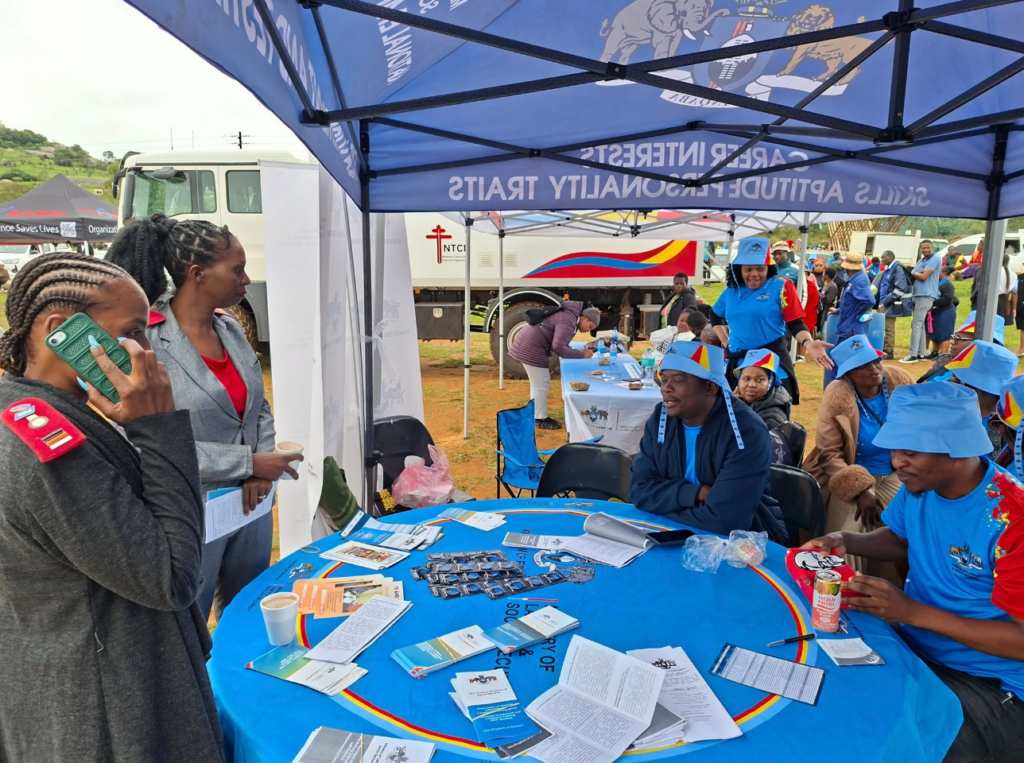
At the same time, the ministry has sharpened the connection between education and employment through the Measurement and Testing Unit. Aptitude testing has expanded across high schools, the Self-Directed Search test has been rolled out nationally, and the unit has supported initiatives such as Career Quest, the National Career Expo, the first Persons with Disabilities Job Expo in 2024, and the Out-of-School Youth Career Expo in 2025.
“A total of 76,239 scholarship beneficiaries since 1986 shows how investment in education continues to shape Eswatini’s future.”
Safer Workplaces, Stronger Protection
The ministry has also helped drive a more robust culture of occupational safety and health. Since the Occupational Safety and Health Act of 2001, progress has included the establishment of the OSH Department, development of the country’s first National OSH Profile, adoption of a National OSH Policy and a National Workplace Wellness Policy, as well as the drafting of Construction Safety Regulations. The ministry also played an important role during the COVID-19 period through Return-to-Work Guidelines and strengthened inspector capacity, including in radiation protection and contributions to international standard-setting on biological hazards in the working environment.
These efforts reflect a growing understanding that decent work is not only about employment, but also about safety, well-being, and dignity in the workplace.
Laying the Foundation for Social Security Reform
As Eswatini’s economy and labour market have evolved, so too has the need for stronger social protection. In 2021, the government adopted a comprehensive National Social Security Policy and Implementation Action Plan to guide reforms in areas such as maternity and sickness benefits, unemployment insurance, and support for vulnerable groups. A social security inquiry also generated baseline data covering both the formal and informal sectors. During the COVID-19 period, the government established an unemployment relief fund of E25 million, while the ministry developed an Unemployment Benefits Scheme to support laid-off workers.
This reform agenda points to a future in which social protection becomes more responsive, inclusive, and better aligned to the realities of modern work.
“From an E25 million unemployment relief fund to pension reform, social security is becoming a stronger pillar of national resilience.”
A Ministry Reflecting a Nation in Progress
As Eswatini marks 40 years of His Majesty’s reign, the Ministry of Labour and Social Security stands as a strong example of how institutions can grow in step with the needs of the people they serve. Its story is one of reform, expansion, and purposeful service, from labour protection and workplace wellness to artisan development, scholarships, inclusion, and social security reform.
The next chapter points toward even stronger social protection, safer workplaces, better labour market intelligence, and a more skilled, more employable, and more inclusive nation. In that sense, the ministry’s journey is also Eswatini’s journey, one shaped by work, dignity, and opportunity.
At a Glance
Indicator
Milestone
Artisans have been producing since 1986
2009
Artisans produced since 1986
25,079
Trade-testing output
21,724
Apprenticeship output
3,355
Recognised trades
33
Companies offering apprenticeship training
51
Scholarship beneficiaries since 1986
76,239
Current student pool
13,547
Formal establishment of the ministry
E641 million
Student living allowance in 2025
E20,000
Study loan recoveries over 8 years
E430.2 million
COVID-19 unemployment relief fund
E25 million
Share this post
Subscribe to our newsletter
Keep up with the latest blog posts by staying updated. No spamming: we promise.