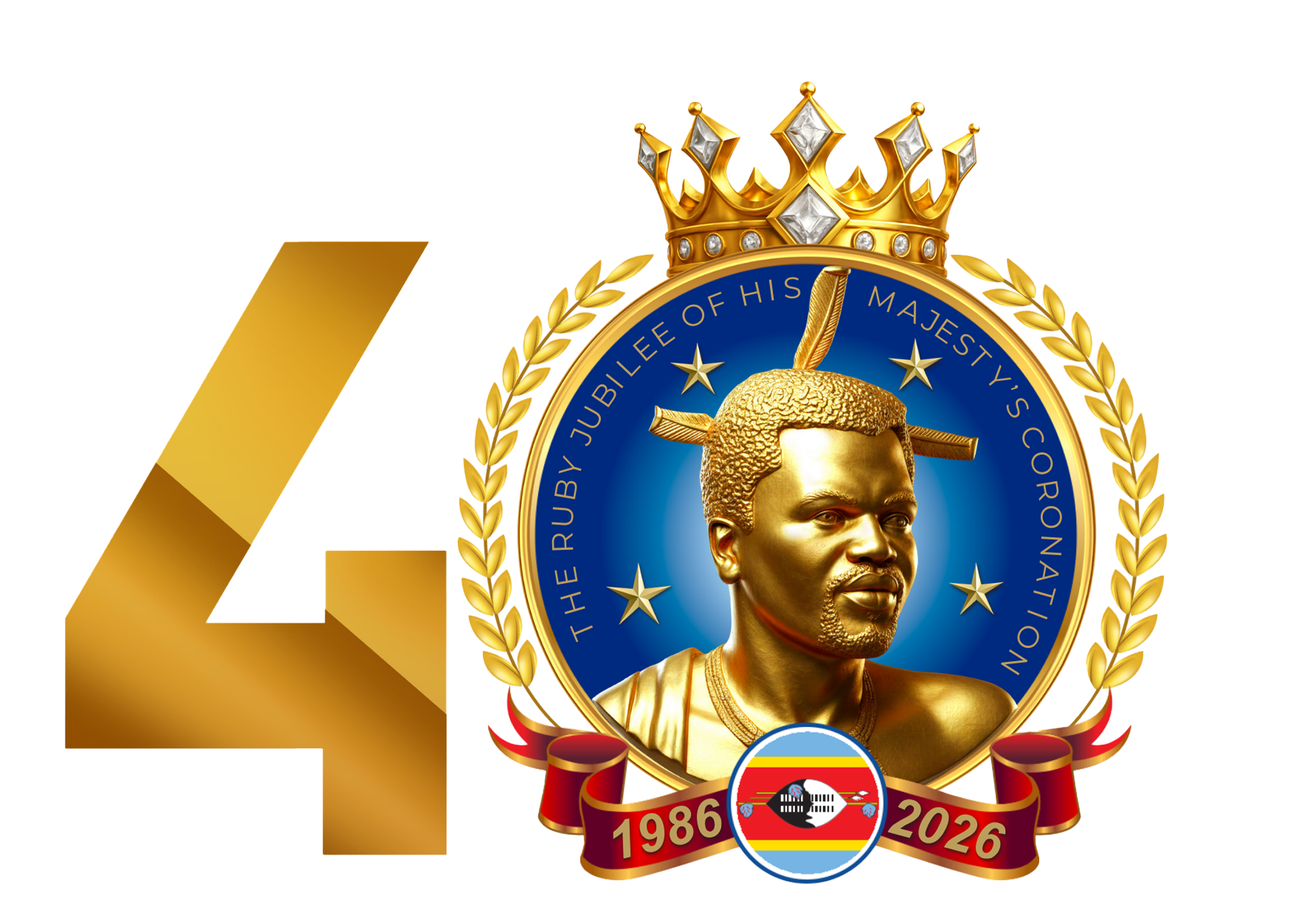
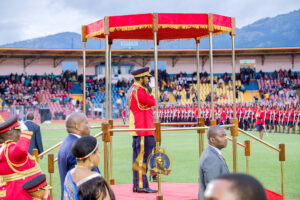
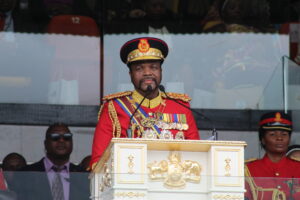
Forty years after ascending the throne at the age of 18, His Majesty King Mswati III’s reign can be read as a story of service, stability, national identity and visible transformation.
When the young King pledged in 1986 to devote his life to the service of his people, he set the tone for a reign that would come to be defined by peace, development, national confidence and a visible transformation of the Kingdom.
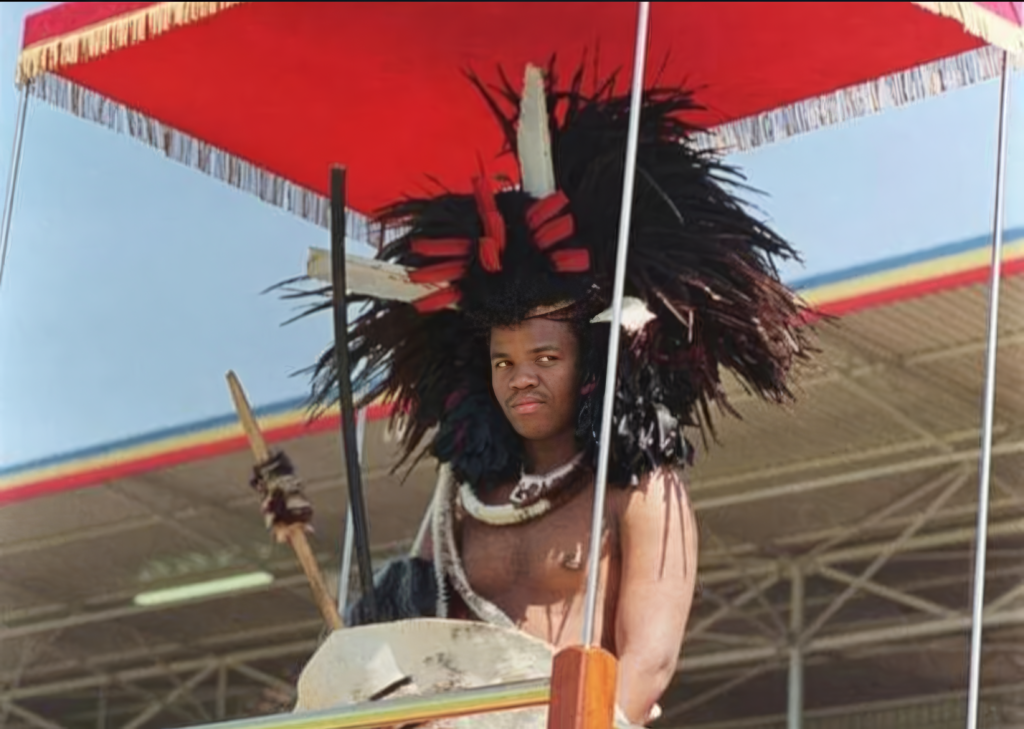
WHEN HIS MAJESTY KING MSWATI III was crowned on 25 April 1986 at the age of 18 years and six days, the Kingdom did not simply witness the ascension of a young monarch. It witnessed the beginning of a lifelong covenant of service. In his coronation speech, he declared: “I have pledged myself to your service and throughout my life, with all my heart, I will try to be worthy of your trust.” Four decades later, that pledge remains the clearest lens through which to read his reign.
From the very beginning, the tone was one of humility, duty and resolve. His Majesty acknowledged the weight of the office before him and the responsibility of carrying the hopes of the nation. In that speech, he also stated: “And I’m new to the task but I have in my predecessors an example I can follow with dignity and confidence. I will work to strengthen the bonds of friendship that already exist between this kingdom and the international community.” Those words mattered because they set the character of the reign early: continuity with the past, confidence in the future and leadership understood first as service.
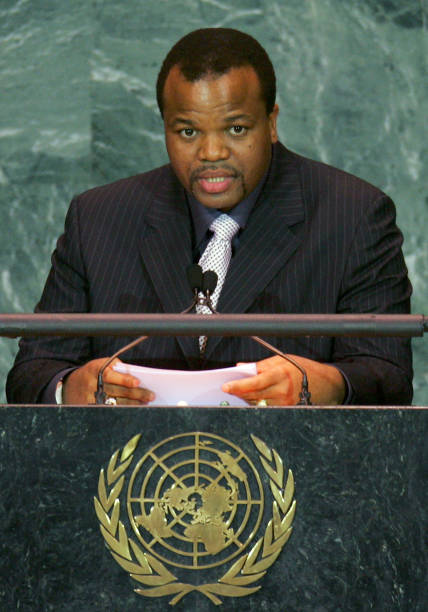
Over the decades, that promise has been echoed in public messages that returned again and again to peace, dignity, unity and development. In his address to the United Nations General Assembly in 2019, His Majesty spoke of the importance of building “peaceful, equitable and sustainable societies for our future generations.” In 2021, he reminded the world that “whilst we embrace modernity, we cannot forget who we are and where we come from” and insisted that “our identity as a nation remains pivotal.” Those statements help explain the wider philosophy of his reign: progress must serve the people, but it must also remain rooted in who emaSwati are.
“I have pledged myself to your service and throughout my life, with all my heart, I will try to be worthy of your trust.”
His Majesty King Mswati III, Coronation Speech, 25 April 1986
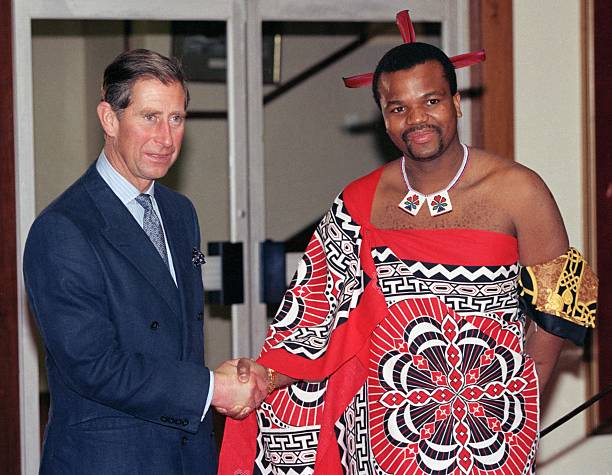
His Majesty King Mswati III meets the King of England, His Majesty King Charles III
A Reign Measured in Change
If the coronation message was the promise, the decades that followed became the long test of that promise. Across the years, the Kingdom expanded its infrastructure, deepened social investment and continued to project stability in a changing regional and global landscape. By the time His Majesty delivered the 2026 Speech from the Throne, he could look back on an Eswatini that had, in his own words, undergone “a profound transformation as a nation.” He pointed to modern highways, the international airport, major dams, social welfare programmes and regional development initiatives as visible signs of a country that has continued to build.
The numbers lend substance to that story. His Majesty noted that the economy had grown from approximately E1.4 billion in 1986 to E95.2 billion in 2026. Adding, while the population had almost doubled since 1986, life expectancy had improved from 32 years to 65 years. These are not simply abstract development markers. They speak to a Kingdom transformed in ways that reach ordinary lives and communities.
BY THE NUMBERS
1986 → 2026 economy E1.4 billion to E95.2 billion, according to the 2026 Speech from the Throne.
Life expectancy From 32 years to 65 years, as reflected in the same 2026 address.
Electricity access 249,014 households connected in 2023, with 50,000 more targeted over five years through World Bank-backed electrification support.
HIV response Eswatini surpassed the 95-95-95 HIV treatment targets, according to the WHO Regional Office for Africa.
Modernisation with Identity
Yet the transformation under His Majesty has never been framed as change for its own sake. It has repeatedly been linked to identity, continuity and national pride. That philosophy was symbolically reinforced in 2018 when the country officially reverted from Swaziland to the Kingdom of Eswatini, a moment widely understood as a reaffirmation of heritage and sovereignty. It reflected a leadership approach that presents modern progress not as a rejection of tradition, but as something that must grow from strong roots.
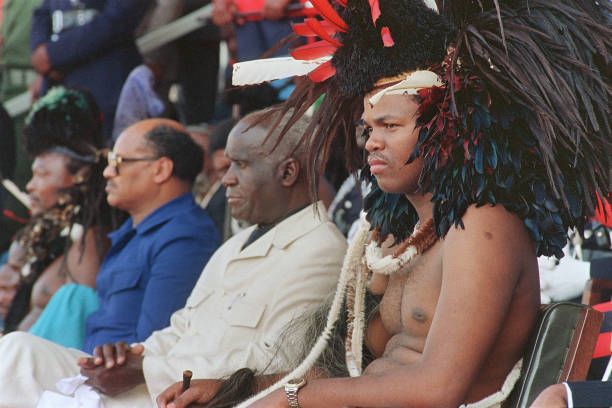
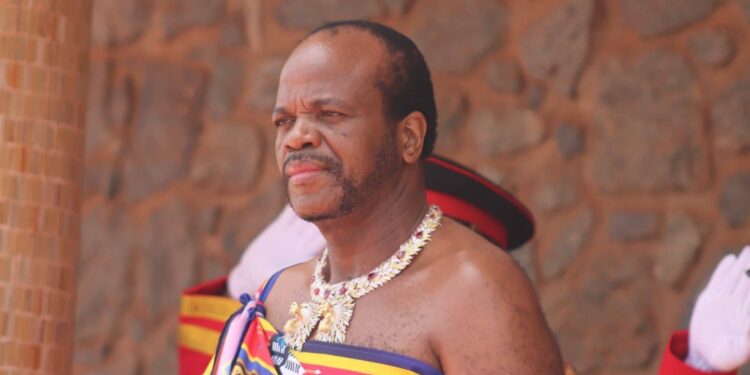
King Mswati III watches the crowd during commemoration of 20th anniversary of his country independence at Somhlolo National Stadium in Mbabane 06 September 1988. At his right, first Zambia’s president Kenneth Kaunda.
The same theme appears in His Majesty’s own words. In 2021, he reminded the international community that identity remains pivotal even as nations embrace modernity. That idea helps explain why the Kingdom’s development story has been told not only through roads, dams and economic indicators, but also through cultural continuity, social cohesion and the preservation of national confidence. In this sense, the reign has consistently held together two ambitions at once: to modernise boldly and to remain unmistakably EmaSwati.
King Mswati III addresses the United Nations General Assembly on September 15, 2005 in New York City. World leaders gathered for the second day of the summit marking the 60th anniversary of the United Nations.
A Covenant of Service
As Eswatini marks the Ruby Jubilee, the anniversary can be read as more than a commemoration of longevity on the throne. It is a national reflection on a promise honoured over time. The young King who pledged his life to the service of his people has spent four decades seeking to be worthy of that trust. Roads, dams, expanding public services, stronger electricity access, health gains, international visibility and a reaffirmed national identity all form part of that record.
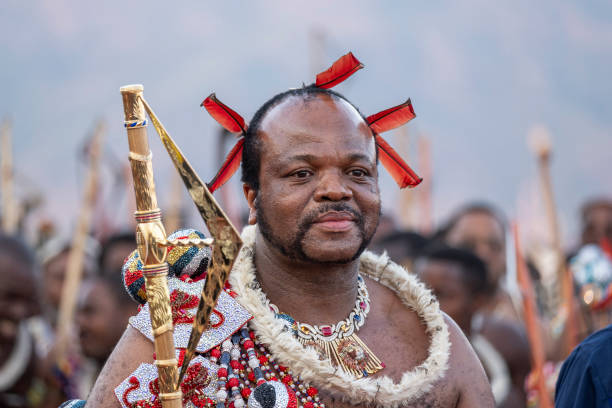
King Mswati III arrives for the 2024 Umhlanga Reed Dance ceremony, at the Ludzidzini Royal Residence on September 2, 2024.
At its heart, however, the story remains a human one. It is the story of a monarch who came to the throne young, accepted the burden of leadership early and devoted his years to the service of the Kingdom. The lasting significance of the Ruby Jubilee lies not only in the number of years marked, but in the continuity of purpose across those years. If the coronation speech was the pledge, the national journey that followed became the living proof of that pledge carried forward.
“A King, is King by his people.” His Majesty used the 2026 Speech from the Throne to thank emaSwati for standing united through the four decades of his reign.
That is why the legacy of His Majesty King Mswati III is not simply that he has reigned for forty years. It is that under his leadership the Kingdom’s journey has been one of endurance, dignity, peace, identity and transformation. The nation can therefore look back on this milestone not only with celebration, but with the recognition that the promise made in 1986 has shaped a full arc of service to the people and to the future of Eswatini.
2026 Speech from the Throne: Forty years on, the story of the Crown is also the story of a promise carried into national life.
Share this post
Subscribe to our newsletter
Keep up with the latest blog posts by staying updated. No spamming: we promise.